Logo

Honda BF-20D Carb Repair

Wjohnson

New member
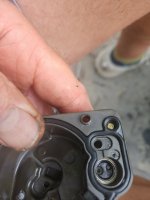
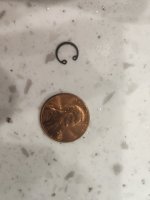
My Honda BF-20D, wouldn't start after sitting for 1 year. I had fuel to the Carb, but the plugs were dry. I decided to disamble the Carb and clean it. The Accelerator Piston was stuck and I used Compressed Air to blow it out. The piston and a Spring came out. When I finished cleaning and reassembling the Carb, I had a small Internal Spring Clip left over. The only place I can think it came out of, is where the Accelerator Spring and Piston came out of. Looking into the well where the Accelerator Sping and Piston came out of, all I see is two small holes. I have attached pictures. Any help would be apprecisted. I don't see an Internal Spring Clip on the Carb parts Diagram.
 

Attachments

  • Screenshot_20260612_175130_Files by Google.jpg
    Screenshot_20260612_175130_Files by Google.jpg
    553.6 KB · Views: 12
  • 20260612_172140.jpg
    20260612_172140.jpg
    119.7 KB · Views: 14
  • 20260612_175021.jpg
    20260612_175021.jpg
    98.4 KB · Views: 13
Hi W

Yep, an oversight in the Honda service information including only a fleeting, unhelpful "instruction" about "properly positioning" the "circlip" (their term) in the Honda Marine Carburetion Manual.
No pictures or illustrations of said circlip in that book either.

You made no mention of the accelerator pump chamber charging check ball so I think that we can assume it's lost. The ball was supposed to seal the fuel charging passage in the float bowl as the pump piston is being depressed.

It's been a minute since I was in one of these carbs but with limited info we have to rely on my "iffy" memory.

The circlip is supposed to act as a seat for the pump piston return spring while also serving to contain the check ball should it become dislodged. It is supposed to be held in the feed hole at the bottom of the piston chamber by the undersized mouth of the hole but they always escape.Due to vibration I suspect.

The other "little hole" you mentioned is the enrichment delivery passage entrance where fuel is supposed to squint into whenever the accelerator pump piston is depressed.

Ok....here's how that accelerator pump REALLY works....

It DOESN'T!

WELL...it does but only for about the first one to two hundred strokes and then it rapidly begins to become USELESS as an accelerator pump.

The piston scrapes and gouges the aluminum bore, rapidly creating clearance so that the pumping action mostly just causes turbulence in the chamber.

AND...
...eventually the check ball escapes it's "little hole" so that, even if the piston to chamber fit remained exquisite, much of the fuel would just be squirted back into the float chamber and very little would go through the delivery circuit and out to the tube nozzle

In other words, those accelerator pumps are a good idea but they...are...JUNK!

The only way to get a fresh chamber cylinder and a new, captive check ball is to purchase a new float chamber bowl. That, along with the pump repair "kit" components will have that pump performing "like new" for possibly 2 or 3 days!!!

.WHEEEEEEE!

That is until it begins self destruction all over again!

I maintained a fleet of BF20D outboards on 20' and 22' pontoon rental boats. I completely removed all the accelerator pump components on several, leaving only the bellows boot and piston push rod to keep dirt and water out, and no one seemed to notice. Not customers nor dockhands or the boss.

You can do something similar and I say you wouldn't be doing anything wrong. Trying to "fix" the accelerator pump on that Keihin carburetor is an exercise in time consuming, expensive futility.

PLEASE! Don't get me wrong! I love almost everything about the 20D, including that little carburetor (if it's kept clean)

I was so impressed with the 20D power, economy, ease of maintenance and UNADULTERATED RUGGEDNESS, I bought a used one for myself. A 2006 model which I still own and love.

It's just that the accelerator pump on that carb is mostly sales gimmick and not much use at all.

WITH A CAVEAT!

IF...
....If the delivery portion of the accelerator pump circuit gets dirty or plugged, the engine will run poorly or maybe not at all! It doesn't matter if all components are in place or not. If that circuit, right out to the brass tube with delivery nozzle can't "breathe" then it's like the engine can't breathe either! It's always baffled me why it's that way. I've never figured it out.
BUT...
...You can sure bet ya that I've learned that it's TRUE and I absolutely know how to properly clear that circuit!

Just put the snap ring back in the bottom of the cylinder and install your spring and piston with the tiny retainer screw and put the bowl back on. The most IMPORTANT thing is to install the push rod and undamaged bellows to keep dirt out. She'll run just fine that way given all else is in good shape and clean.

Sorry if I lost you. It's a favorite subject of mine. Happy to discuss or answer questions. Although, as you can see, it gets wordy.

Good luck
 
Wow, what an in depth explanation!!! You are definitely the BF20 guru! I will do exactly what you recommended. Even if I could find the Checkball, with the small size of the Snap Ring, I can envision what the Snap Ring would lock on to. Thank you ever so much for your time in answering me.

Walt Johnson
(908) 240-9947-cell
 
Hi W

Yep, an oversight in the Honda service information including only a fleeting, unhelpful "instruction" about "properly positioning" the "circlip" (their term) in the Honda Marine Carburetion Manual.
No pictures or illustrations of said circlip in that book either.

You made no mention of the accelerator pump chamber charging check ball so I think that we can assume it's lost. The ball was supposed to seal the fuel charging passage in the float bowl as the pump piston is being depressed.

It's been a minute since I was in one of these carbs but with limited info we have to rely on my "iffy" memory.

The circlip is supposed to act as a seat for the pump piston return spring while also serving to contain the check ball should it become dislodged. It is supposed to be held in the feed hole at the bottom of the piston chamber by the undersized mouth of the hole but they always escape.Due to vibration I suspect.

The other "little hole" you mentioned is the enrichment delivery passage entrance where fuel is supposed to squint into whenever the accelerator pump piston is depressed.

Ok....here's how that accelerator pump REALLY works....

It DOESN'T!

WELL...it does but only for about the first one to two hundred strokes and then it rapidly begins to become USELESS as an accelerator pump.

The piston scrapes and gouges the aluminum bore, rapidly creating clearance so that the pumping action mostly just causes turbulence in the chamber.

AND...
...eventually the check ball escapes it's "little hole" so that, even if the piston to chamber fit remained exquisite, much of the fuel would just be squirted back into the float chamber and very little would go through the delivery circuit and out to the tube nozzle

In other words, those accelerator pumps are a good idea but they...are...JUNK!

The only way to get a fresh chamber cylinder and a new, captive check ball is to purchase a new float chamber bowl. That, along with the pump repair "kit" components will have that pump performing "like new" for possibly 2 or 3 days!!!

.WHEEEEEEE!

That is until it begins self destruction all over again!

I maintained a fleet of BF20D outboards on 20' and 22' pontoon rental boats. I completely removed all the accelerator pump components on several, leaving only the bellows boot and piston push rod to keep dirt and water out, and no one seemed to notice. Not customers nor dockhands or the boss.

You can do something similar and I say you wouldn't be doing anything wrong. Trying to "fix" the accelerator pump on that Keihin carburetor is an exercise in time consuming, expensive futility.

PLEASE! Don't get me wrong! I love almost everything about the 20D, including that little carburetor (if it's kept clean)

I was so impressed with the 20D power, economy, ease of maintenance and UNADULTERATED RUGGEDNESS, I bought a used one for myself. A 2006 model which I still own and love.

It's just that the accelerator pump on that carb is mostly sales gimmick and not much use at all.

WITH A CAVEAT!

IF...
....If the delivery portion of the accelerator pump circuit gets dirty or plugged, the engine will run poorly or maybe not at all! It doesn't matter if all components are in place or not. If that circuit, right out to the brass tube with delivery nozzle can't "breathe" then it's like the engine can't breathe either! It's always baffled me why it's that way. I've never figured it out.
BUT...
...You can sure bet ya that I've learned that it's TRUE and I absolutely know how to properly clear that circuit!

Just put the snap ring back in the bottom of the cylinder and install your spring and piston with the tiny retainer screw and put the bowl back on. The most IMPORTANT thing is to install the push rod and undamaged bellows to keep dirt out. She'll run just fine that way given all else is in good shape and clean.

Sorry if I lost you. It's a favorite subject of mine. Happy to discuss or answer questions. Although, as you can see, it gets wordy.

Good luck
jgmo, 1st stupid move, I was working on the Carb, in my grave driveway, with a 2' x 2' piece of plastic on the ground. After your explanation, I went out and w/i 30 sec, I found the silver Ball. I'm a big positive thinker. Does the silver ball go in the small or the slighty larger hole? I dropoed the Spring Clip in the chamber, but itbl just seems to float around.
 
Well, the SHORT answer is DON'T WORRY ABOUT THE BALL!!!

The ball will NEVER stay put NOW, no matter what you do! Its NOT YOUR FAULT!! BTDT!!!

If you...
...like me... when I FIRST encountered the loose ball...
can't TOLERATE a less than perfect repair, you will need to replace the float chamber. It comes with a new ball. But the cost and the wait and the effort will all be for NAUGHT because the design DOESN'T WORK!

IT WAS DESTINED FOR FAILURE.

The VERY reason I used so many words TRYING to explain it. (no problem, I am old and bored and this stuff is my entertainment)

NOT YOUR FAULT!

I COMPLETELY UNDERSTAND IF YOU CAN'T BELIEVE ME!

NO ONE could have convinced me of that EITHER before I had purchased and replaced several float chambers to achieve my "PERFECT".repair only to find out later each pump failed and the balls fall out on their own without ANY assistance from me.

PUT ANOTHER WAY...

....Sometimes we won't believe another human's testimonial but there's no denying that the HAMMER is HARD after you smash your thumb!

BELIEVE THE HAMMER!!


I honestly can't remember about the snap ring and how it fits in the bore.

Same with the ball hole. Don't recall.

In most "liquid flow" and gas scenarios, the large hole would be the "intake" or supply. But the good folks at Keihin might not conform to that convention.

Either way, those details became irrelevant to me after I figured out the pump, as a whole, SUCKS and we can ALL get along just fine without it being "properly assembled".

If I've failed to convince you, the only alternative is to buy a new float chamber and prove it to yourself. No problem with that on this end. That's EXACTLY what I would have done had someone tried to convince me.

BELIEVE THE HAMMER!! :>)
 
Well, the SHORT answer is DON'T WORRY ABOUT THE BALL!!!

The ball will NEVER stay put NOW, no matter what you do! Its NOT YOUR FAULT!! BTDT!!!

If you...
...like me... when I FIRST encountered the loose ball...
can't TOLERATE a less than perfect repair, you will need to replace the float chamber. It comes with a new ball. But the cost and the wait and the effort will all be for NAUGHT because the design DOESN'T WORK!

IT WAS DESTINED FOR FAILURE.

The VERY reason I used so many words TRYING to explain it. (no problem, I am old and bored and this stuff is my entertainment)

NOT YOUR FAULT!

I COMPLETELY UNDERSTAND IF YOU CAN'T BELIEVE ME!

NO ONE could have convinced me of that EITHER before I had purchased and replaced several float chambers to achieve my "PERFECT".repair only to find out later each pump failed and the balls fall out on their own without ANY assistance from me.

PUT ANOTHER WAY...

....Sometimes we won't believe another human's testimonial but there's no denying that the HAMMER is HARD after you smash your thumb!

BELIEVE THE HAMMER!!


I honestly can't remember about the snap ring and how it fits in the bore.

Same with the ball hole. Don't recall.

In most "liquid flow" and gas scenarios, the large hole would be the "intake" or supply.. But the good folks at Keihin might not conform to that convention.

Either way, those details became irrelevant to me after I figured out the pump, as a whole, SUCKS a we can ALL get along just fine without it being "properly assembled".

If I've failed to convince you, the only alternative is to buy a new float chamber and prove it to yourself. No problem with that on this end. That's EXACTLY what I would have done had someone tried to convince me.

BELIEVE THE HAMMER!! :>)
 
Not sure how I double posted but sorry about that.

Have you had any progress with this project?

I started thinking about why you took it apart and realize I should have given you some tips about what happens when gas is allowed to sit in the bowl too long. If she's not firing up and running well there are a few things you can check and try if needed.

Good luck.
 
jgmo,
Sorry for not responding sooner, we had out of town guests for three days and I didn't get back to the motor until this afternoon. Let me start by saying, I totally beleive, trust and followed your advice. Being a retired Mechanical Engeer I was just curious how the ball and clip attached. I reassembled the carb, without the ball and just dropped the clip in the chamber. The engine still won't start.
Let me give you some background:
-Engine is a 2016
-Less than 100 hours on the engine
-Last used June 2025
-Forgot to winterize/drain fuel
-Battery is fully charged and on a charger
-This week I dumped the old gas, and filled the tank with fresh EthanolFree Marine Fuel.
-The engine kicked over one time and stalled, and never kicked over since
-Checked for Fuel flow at Bulb, before and after Gas Filter, at Fuel Pump outlet and in Float Bowl. All good
-Plugs apeared dry after repeated cranking
-Disassembled Carb, soaked for 30 mins in Carb Cleaned, blew out with compressed air and reassembled
-Lost Accelerator Pump parts in cleaning process
-I didn't use any new gaskets, old one looked good
Reassembled carb and it won't kick over
-Checked the fuel flow system and all good, but plugs still seem to be dry aftef repeated cramlnking
-Should I redo the Carb cleaning?
-When I cleaned the Carb, I didn't remove the Limiter/Pilot Screw
I truely appreciate any help you can provide!
 
Well, no problem about speedyness. Time is part of my riches.

The problem is that the 20 D carb is a bit more sophisticated and finicky than it looks other than that accelerator pump.

Leaving fuel sit in the bowl truly can complicate getting her going again.

I should have told you before but the very first thing you need to do is to closely examine the bottom of the interior of the float chamber. It has little feed "tunnels" that supply fuel to the accelerator pump and to the starting enrichment (SE) system otherwise known as the "auto choke"
Those little tunnels can get clogged with "gooey" mud and that can starve the SE from getting fuel and keep the accelerator pump circuit from "breathing" it often can require running a small wire through them and then finishing up with a carb spray rinse. Use STIFF wire for those.

With the bowl off, you can see the two brass "dip tubes" in the main body. One is for pulling fuel from the enrichment "well" and is located on the side opposite of the accelerator pump. If fuel can't travel through the little tunnel and fill the SE well then the engine is unlikely start at all.

The brass tube near the accelerator pump contains the PRIMARY fuel jet (not to be confused with the MAIN jet).

That primary jet is veey small, clogs easily and can be difficult to clear if it sat for a time in water contaminated gas. Initially, just try interrogating the jet with a strand of small wire. You may need to get a piece from a multi-strand, small gauge automotive electrical wire to determine if the jet is open or plugged. The jet is recessed up inside the end of that tube and is hard to see.
You have to be careful though probing with the wire because, if you snap the wire off in the jet, you'll probably need a new carburetor because the jet and tube can't be replaced.

Try those things and get back to me with what you find or ANY questions you may have.

Good luck.
 
I just realized that we never spoke about whether your carb is an auto choke (remote control outboard) or a manual choke (tiller handle outboard).
Once again, I get out over the skis.

And here I was popping off about the auto choke.

Actually, they are very similar in operation but it's good for us to be on the same page here.

Let me know when you get a chance.
 
Back
Top