

HBCALIAKID
New member
I have a 2006 mercury/Yamaha 225 CXXL4Scounter rotating , can’t find the location on the poppet valve. Any help would really appreciate it.
MarineEngine.com does not offer troubleshooting assistance or repair advice by email or by telephone.
You are invited to join our public Boat Repair Forum to seek assistance from other members.
You may also visit the Boat Motor Manuals section of our site to obtain a service manual.
I have a 2006 mercury/Yamaha 225 CXXL4Scounter rotating , can’t find the location on the poppet valve. Any help would really appreciate it.
That's a neat idea. If it cleared the problem, I'd go ahead and replace the valve (anyway) as the root causes (corrosion I'd guess) is still at the site of the reluctance to open.Is it sticking? Use low pressure compressed air to free it by placing the nozzle of a blow gun at the fitting for the water stream below the powerhead that shows the water pump is working. Just a short burst.
I was summerizing an outboard and at the time, I didn't know about the poppit valve, so after replacing the impeller, etc and reassembly, I basically freaked out when I saw nothing coming out. Apparently, someone heard what I had said (not something nice people say), so he came out and I told him that no water came out- he told me about the compressed air and it worked. The ball sticks after sitting over the Winter. I don't know how it was winterized, so I can't comment about the possibility that it may not have been run before being put away or if any maintenance had been done.That's a neat idea. If it cleared the problem, I'd go ahead and replace the valve (anyway) as the root causes (corrosion I'd guess) is still at the site of the reluctance to open.
Spring tension is necessary to keep it shut during low water pressure operation where the Tstat's in charge....RPMs below 2500. Doubt that one could provide that function without something that has spring sensitivity without it not being metal. Having a (resilient) rubber plug against the aluminum engine is a necessity, but it's the functionality of the device that's the problem. IMHO.I was summerizing an outboard and at the time, I didn't know about the poppit valve, so after replacing the impeller, etc and reassembly, I basically freaked out when I saw nothing coming out. Apparently, someone heard what I had said (not something nice people say), so he came out and I told him that no water came out- he told me about the compressed air and it worked. The ball sticks after sitting over the Winter. I don't know how it was winterized, so I can't comment about the possibility that it may not have been run before being put away or if any maintenance had been done.
I don't think it would be a good idea to make that assembly out of a metal that can corrode- that would be asking for trouble.
A stainless spring would work, but the rest can be plastic. Sitting for an extended period causes this- who knows what kind of poi is in the water?Spring tension is necessary to keep it shut during low water pressure operation where the Tstat's in charge....RPMs below 2500. Doubt that one could provide that function without something that has spring sensitivity without it not being metal. Having a (resilient) rubber plug against the aluminum engine is a necessity, but it's the functionality of the device that's the problem. IMHO.
Fine except the sealing surface. Surely that interface has to have a "contourable" device and rubber is such, plastic isn't!A stainless spring would work, but the rest can be plastic. Sitting for an extended period causes this- who knows what kind of poi is in the water?
I would hope they use some kind of Silicone rubber since it can be heat-tolerant and stuff doesn't really like to stick to it but as I posed, I haven't needed to remove or replace one of these.Fine except the sealing surface. Surely that interface has to have a "contourable" device and rubber is such, plastic isn't!
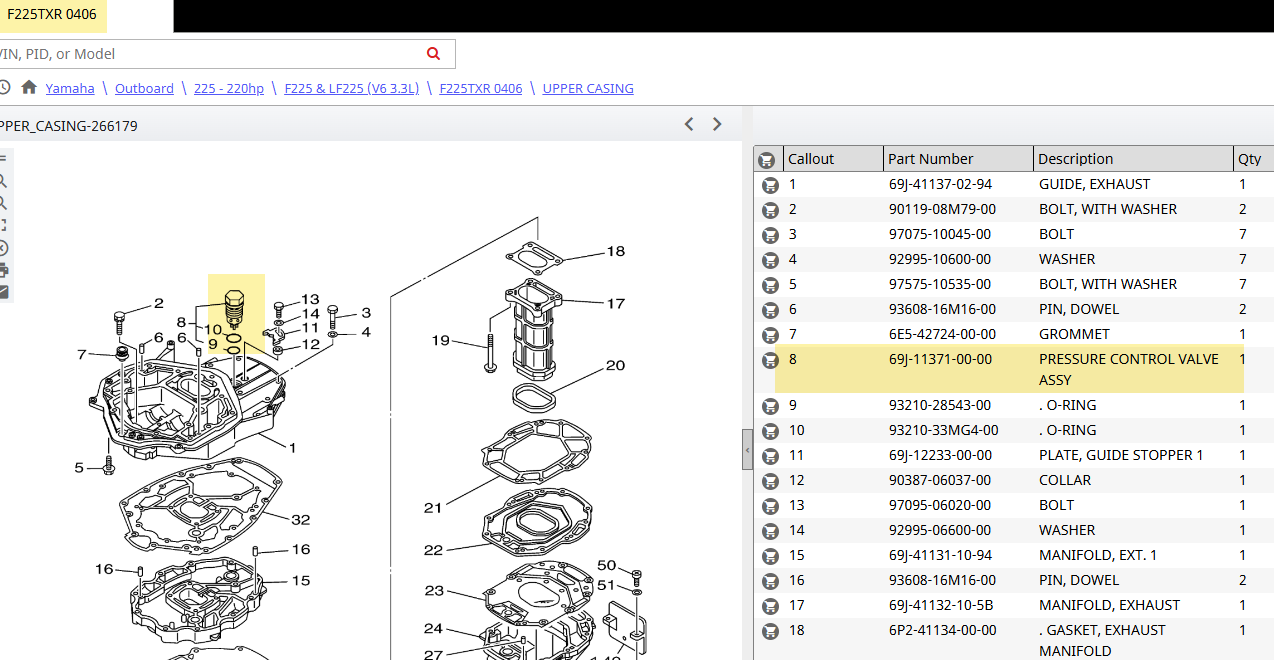
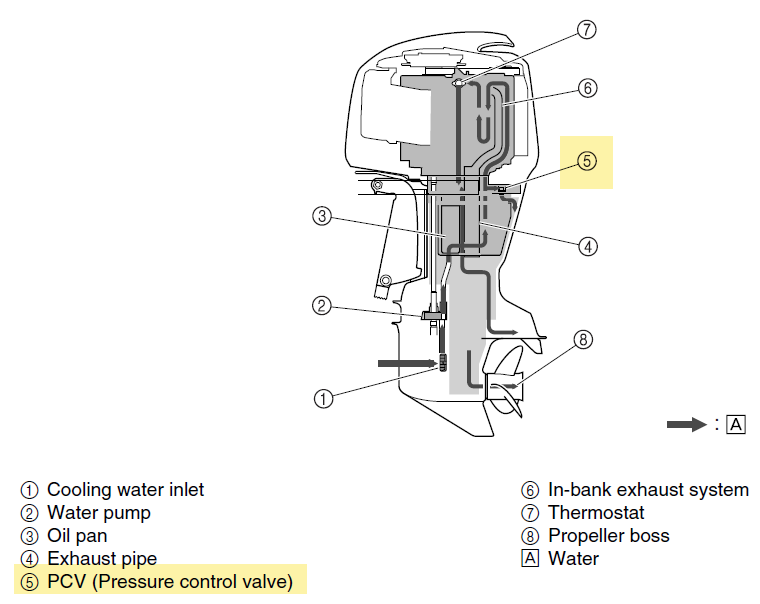
Nice comprehensive response. That should make the poster's job very easy especially with the diagrams!Yamaha refers to the valve as a pressure control valve. Purpose is to open and prevent water pressure from becoming too high when the motor is running at high RPM's. It does not act as some Mercury valves do.
It is located on the exhaust guide. Rear of the motor. A panel has to be removed to gain access.