Logo

6/8 awg wire on < 30 amp draw to prevent voltage drop

trynhooker

Regular Contributor
This is something I'm researching due to my newish stereo cycling off at high volume. 1 ext. amp (30 amp driving 2 speakers and small sub)), 1 built in amp in head unit (4x50) @ 4 speakers 4 ohms each.

I understand electrical, however, I can't seem to find the correct way to do this.

My boats original main power wire is awg 10 thru a 30amp fuse to first fuse box, then it's jumped over to #2 fuse box. All loads are fused individually.

When the radio cuts off, it immediately comes back on and stays on if lowering volume.
This event NEVER trips the main 30 amp fuse, so it's obvious there is no overcurrent issue.

There seems to be a voltage drop issue as I can watch my dash voltage gage constantly cycle between 10 up to whatever my current engine charging output is at rpm.

The question:
1. I'm thinking of running 6 or 8 awg main power, thru a breaker. The wire run Total would be about 25ft (+ and - length combined ) for a < 3% v. drop (hence the 6 awg).
2. The unanswered problem, using a 6 or 8 wire to prevent the voltage drop, should I just stay with a 30 amp breaker since it's not popping the fuse with the 10awg?

I believe the answer is YES, seeing as the bigger wire will have much less resistance reducing voltage drop and heat etc.
 
you really need to get the units consistent...figure the total current draw for your audio system and then select the wire size based on that...I think running a breakered dedicated power feed from the battery will pay you dividends in the long run....just use marine grade wire and matching connectors.
 
you really need to get the units consistent...figure the total current draw for your audio system and then select the wire size based on that...I think running a breakered dedicated power feed from the battery will pay you dividends in the long run....just use marine grade wire and matching connectors.
Thanks Mark.
Seems the only way to reduce voltage drop is by using a larger wire. 6 or 8 vice current 10.
Like I stated, my current 30a fuse never pops so I know everything running pulls < 30 amps.
 
I'd be incline to think that #10 would be adequate...but, if you have the funds available, there's nothing wrong with going to #6 (other than its a PITA to work with...
 
That's what's confusing me. I'm not drawing 30 amp's thru the #10, but this has unit has done this since I installed it new.
Only thing I can think of is a voltage drop, and the only cause I can think of is it being the #10.

I'll probably go to #8 and can get it for $35ish for 25ft of red/black sheathed together.
Thanks again
 
That's what's confusing me. I'm not drawing 30 amp's thru the #10, but this has unit has done this since I installed it new.
Only thing I can think of is a voltage drop, and the only cause I can think of is it being the #10.

I'll probably go to #8 and can get it for $35ish for 25ft of red/black sheathed together.
Thanks again
Ayuh,.... A multimeter can answer that question,......

With yer volt meter jumping around, I doubt wire gage is the problem,....
 
I think I found the issue by accident.
I checked my main 30 amp inline fuse to make sure it wasn't corroded etc.

As soon as I moved the fuse holder to grab it, I noticed power to stereo go off (engine wasn't running). Slightly moved it again, power came back on.

Opened it up, and the outlet end looked like only a very small section of the fuse was touching the wire end. That end flat section looked kinda wonky.

Have to find a new one now or prob just buy a 30 amp breaker.

Also, before all that, I checked batt voltage at batt, 12.4v. Checked power into main fuse panel with stereo cranked up, 12v. Not much loss at all so NO obvious low voltage issue.
Tried to measure amp's thru main power wire, but my VM adapters book said its for measuring 10amp or more.
Whether it was accurate or not, I saw at most maybe 2.4 millivolts, which coverts to 2.4 amp draw from stereo, and that wasn't constant. No obvious issue there either.
 
if the draw is nominally 5 amp then a 30 amp fuse is rather high for protecting the wiring...

If you have the time, frequently you can find MIL-SPEC circuit breakers for pennies on the dollar on the surplus market...they tolerate the marine environment very well...
 
if the draw is nominally 5 amp then a 30 amp fuse is rather high for protecting the wiring...

If you have the time, frequently you can find MIL-SPEC circuit breakers for pennies on the dollar on the surplus market...they tolerate the marine environment very well...
The 30 amp fuse is the original wire and fuse rating the boat was made with. 1997 Trophy 2002WA.
Also, I'm referring to the "main" power feed, which is why it's 30 amp, feeding everything.
 
This is something I'm researching due to my newish stereo cycling off at high volume. 1 ext. amp (30 amp driving 2 speakers and small sub)), 1 built in amp in head unit (4x50) @ 4 speakers 4 ohms each.

I understand electrical, however, I can't seem to find the correct way to do this.

My boats original main power wire is awg 10 thru a 30amp fuse to first fuse box, then it's jumped over to #2 fuse box. All loads are fused individually.

When the radio cuts off, it immediately comes back on and stays on if lowering volume.
This event NEVER trips the main 30 amp fuse, so it's obvious there is no overcurrent issue.

There seems to be a voltage drop issue as I can watch my dash voltage gage constantly cycle between 10 up to whatever my current engine charging output is at rpm.

The question:
1. I'm thinking of running 6 or 8 awg main power, thru a breaker. The wire run Total would be about 25ft (+ and - length combined ) for a < 3% v. drop (hence the 6 awg).
2. The unanswered problem, using a 6 or 8 wire to prevent the voltage drop, should I just stay with a 30 amp breaker since it's not popping the fuse with the 10awg?

I believe the answer is YES, seeing as the bigger wire will have much less resistance reducing voltage drop and heat etc.
Measure the voltage AT the head unit- it's likely caused by something other than the wire gauge itself, usually a corroded connection or bad splice. Dirty/loose battery cable clamps are a common cause- are you using the lead ends with a bolt or ring terminals? Wing nuts, or stainless nuts with lock washers? (USCG doesn't want wing nuts or Nylock nuts)

You might also want to do a voltage drop test- measure voltage (from the battery posts, not the terminals) to each connection, working from the battery to the head unit, ON the positive cable. If you see more than about .1VDC, you need to improve that connection. Repeat this on the ground cable because this shows the drop between connections, not just a number between cables, which can be caused at any point.

What are you using for the head unit?

If you want to test the head unit's power wire to see if that's the cause, you can run a temporary 12ga wire with the proper fuse at the battery and connect the head unit. If it never shuts off, you can install the wire permanently and add a relay at the dash to prevent it being live constantly- the original red wire can be used to act as the 'ignition enable' wire. If you want to connect the head unit's memory/main power wire to the 12ga, that completely bypasses the original wiring. Wire the head unit's memory/main power wire to the battery side of the relay.
 
Jimn,
Thanks for info. You may have missed this above but I think I found the fault with my main fuse off the battery.
If you look at a glass fuse at one end, mine has a little pin sized spot on it where I believe it was the only contact being made with the flat end of the wire inside the fuse holder (the connection flat piece is kinda wonky looking).
I wiggled it and watched power to radio go off and on.

I haven't got a replacement yet, but I'm thinking with such little contact that fuse had on that one end, was basically a huge restriction.

Kinda like taking a stranded copper wire and connecting only one strand of it lol Not much for a solid connection and would obviously restrict flow.
 
Jimn,
Thanks for info. You may have missed this above but I think I found the fault with my main fuse off the battery.
If you look at a glass fuse at one end, mine has a little pin sized spot on it where I believe it was the only contact being made with the flat end of the wire inside the fuse holder (the connection flat piece is kinda wonky looking).
I wiggled it and watched power to radio go off and on.

I haven't got a replacement yet, but I'm thinking with such little contact that fuse had on that one end, was basically a huge restriction.

Kinda like taking a stranded copper wire and connecting only one strand of it lol Not much for a solid connection and would obviously restrict flow.
I did miss that post, but I have some questions-

How did you come up with 2.4mV ~2,4mA? The only way that voltage would correspond to that current is if it's passing through a 1 Ohm resistor (I=E/R).

Is the second fuse block wired through a fuse in the first fuse block, or are the + and - for each wired parallel?

Considering the number of fuses made, the low number of bad ones is pretty impressive, IMO. I have seen some, but not many and I have installed or replaced a lot of fuses, in many applications.

It's possible that the fuse actually failed at the spot you found.

You may be able to buy a current clamp for your meter, so it won't be limited to 10A, or whatever it's limited to.
 
Jimn
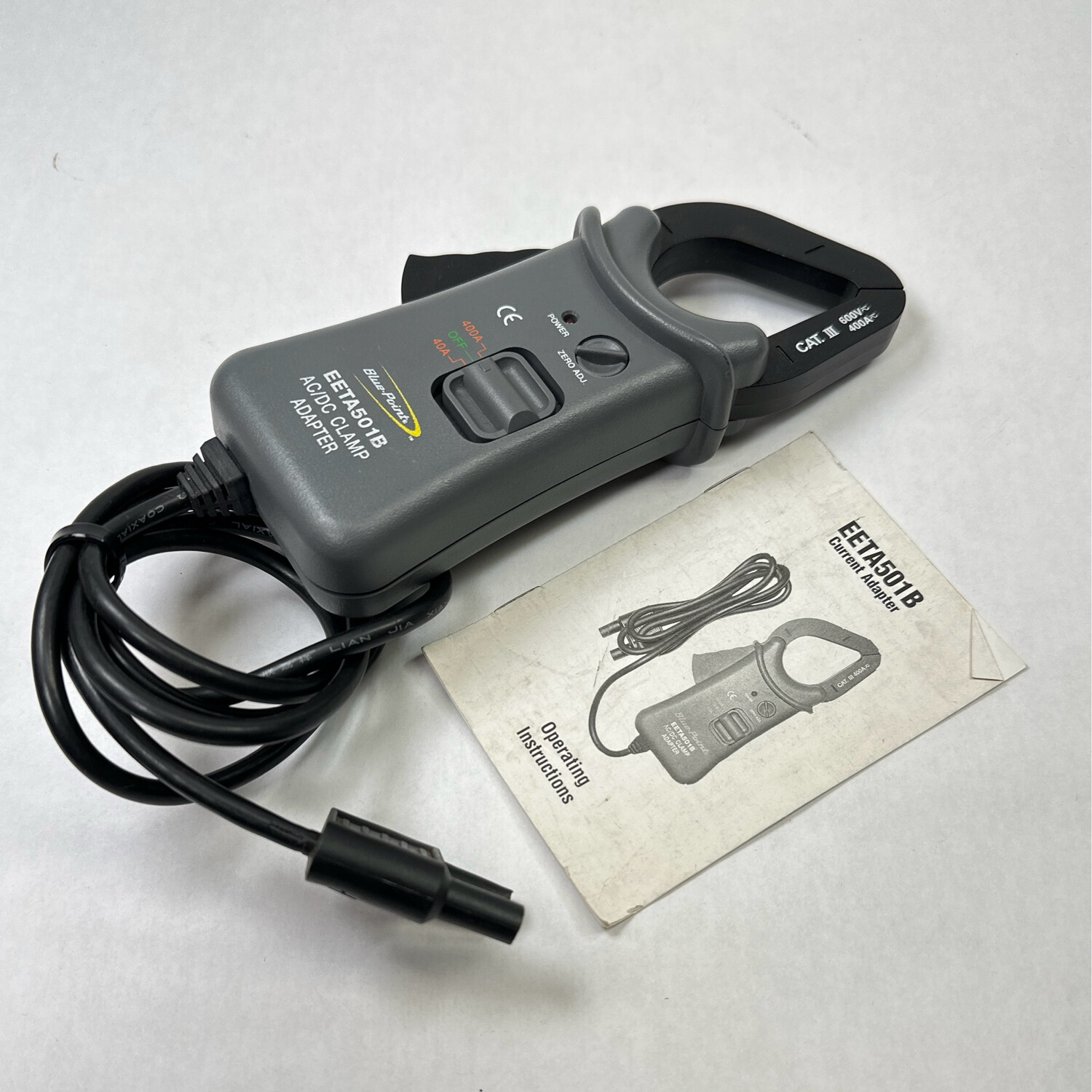
I have a adapter for amp's (clamp on, that plugs into dmm +/- connectors). It uses the DC mv scale. The output of the adapter is 1mv DC per amp (actual current).

So 2.4mv coverts to 2.4 amp's. If dmm read 10.8 mv, of course it would mean 10.8 amps.

Main power to 1st fuse box via #10, then from that connection, #10 wire to 2nd box. Grounds the same.
The second box has very small loads, I was short a few fuses so had to add 2nd box.

The amp adapter book is kind of confusing as it states it can be used to safely measure current above 10 amp's. Whereas the actual adapter has 40a and 400a switch. I believe they intended it to say its "more accurate" measuring 10 - 40, or 40 - 400, than it is <10a. IDK

I picked up a 30 amp breaker yesterday so I can remove the old glass fuse.
 
Jimn
I have a adapter for amp's (clamp on, that plugs into dmm +/- connectors). It uses the DC mv scale. The output of the adapter is 1mv DC per amp (actual current).

So 2.4mv coverts to 2.4 amp's. If dmm read 10.8 mv, of course it would mean 10.8 amps.

Main power to 1st fuse box via #10, then from that connection, #10 wire to 2nd box. Grounds the same.
The second box has very small loads, I was short a few fuses so had to add 2nd box.

The amp adapter book is kind of confusing as it states it can be used to safely measure current above 10 amp's. Whereas the actual adapter has 40a and 400a switch. I believe they intended it to say its "more accurate" measuring 10 - 40, or 40 - 400, than it is <10a. IDK

I picked up a 30 amp breaker yesterday so I can remove the old glass fuse.
So, the clamp is like a mini version of the one on a timing light? Generic, or specific to Fluke?

I definitely prefer breakers to fuses- saw too many fail in weird ways when I did car audio, including the way yours did.
 
The clamp on adapters I seen over the past few years are generic....FWIW, Fluke equipment is NOT what it used to be...
 
The clamp on adapters I seen over the past few years are generic....FWIW, Fluke equipment is NOT what it used to be...
I'm not sure they can afford to be- the cheap stuff is pretty good/good enough for most applications and if someone needs extreme accuracy, they can buy a relatively cheap scope.

I bought a clamp-on multi-meter from Harbor Freight, but haven't checked it for accuracy. If it's halfway decent, that will be great.
 
I have another amp clamp, bigger, can read volts/ohms with plug in leads.

Good news.
I installed a new 30amp breaker at the battery, and ditched the fuse a few days ago.
Just 20 min ago was in the boat, and can now crank the volume up to 43 with bass boost 2, higher with bass boost 1 and zero boost, and that was with engine off. So I set my volume limit to 43 now and before I could only go to 36/38 before it crapped out.
It definitely corrected the issue seeing as how that fuse had barely any contact on one side.

At some point I'll probably buy some 8 awg and run directly off my 1 deep cycle.
 
So, the clamp is like a mini version of the one on a timing light? Generic, or specific to Fluke?

I definitely prefer breakers to fuses- saw too many fail in weird ways when I did car audio, including the way yours did.
It's a good bit bigger than the clamp on a timing light. It's a Blue Point set. I got it free when I graduated MMI in Orlando in 2009. It has a tach adapter, temp prob adapter, temp wire probe adapter.

This one:
 
I have another amp clamp, bigger, can read volts/ohms with plug in leads.

Good news.
I installed a new 30amp breaker at the battery, and ditched the fuse a few days ago.
Just 20 min ago was in the boat, and can now crank the volume up to 43 with bass boost 2, higher with bass boost 1 and zero boost, and that was with engine off. So I set my volume limit to 43 now and before I could only go to 36/38 before it crapped out.
It definitely corrected the issue seeing as how that fuse had barely any contact on one side.

At some point I'll probably buy some 8 awg and run directly off my 1 deep cycle.
Just for informational purposes- What's the maximum volume setting? Don't go to that- the distortion will kill your speakers. I have heard many people say that their amplifier (in any kind of equipment) doesn't distort and when I told them that's impossible with normal signal level from the tape/CD/etc, they became angry and completely unwilling to listen. ALL amplifiers can be made to distort and the easiest WRT head units is to go WOT. With amplifiers, it's by turning the input level control(s) all the way up.

The symptom of low current capacity is common, where the sound stops completely. In others, the whole thing goes out, including the lights and others will have intermittent audio where it makes a kind of "B-B-B-B" sound- this is commonly called 'motorboating' in the audio industries.

How far down do you let your deep cycle battery go?
 
Back
Top