Logo

4.3 MPI engines sputters when attaching rabbit ears for flushing

Seagels

New member
I have a 4.3 mpi, with about 80., I bought it with 50, and this is a crazy problem. Seems the engine can run fine, but then when I get it back to my parking area and attach the rabbit ears to flush, the engine starts immediately to sputter. Eventually it dies. However sometime later maybe hours later I can try it again and it restart fine. I have had it on the water and it normally been running fine, all except one time, I parked it and had lunch. then went to back it up to get out of space, and it started to sputter and eventually dies. We waited about 20 minutes of intermittently trying to start. Eventually it came back fine,and was fine for rest of afternoon for me to get it home and even turn off and then on while I got trailer? I am thinking that it might have something to do with the baffles, but because if happened on the water once, I am not sure. I have a vessel view and there never have been any codes whatsoever. No misfire codes, nothing. it has a new water separator, new water pump. Has anyone had this problem or any idea ?
 
I have a 4.3 mpi, with about 80., I bought it with 50, ...

what are you talking about with the numbers???

what year is it (ie, how old is the engine?

With no codes (stored or pending), that suggests the root cause is not tied to anything the ECU monitors...and intermittents can be time consuming to resolve...
 
what are you talking about with the numbers???

what year is it (ie, how old is the engine?

With no codes (stored or pending), that suggests the root cause is not tied to anything the ECU monitors...and intermittents can be time consuming to resolve...
Hours 50 and now has 80 hrs .
Its a 2015 Tahoe
 
Still having issue seems to occur only when I attach the rabbit ears and the engine is hot. It almost feels like a vapor lock engine spots and eventually dies. Once the engine cools, it starts up with no problem.
 
Still having issue seems to occur only when I attach the rabbit ears and the engine is hot. It almost feels like a vapor lock engine spots and eventually dies. Once the engine cools, it starts up with no problem.
Have your engine serial number handy?
Also lets figure out what engine cooling design your engine uses as it should either be Thermostat & Housing, Single & 3 Point Drain ... Or the Thermostat & Housing, 7 Point Drain design?

^ Does yours have the T fitting on top (item # 13) of the thermostat or a plug (Item #2)?

Also, what design (if any) of the 2 following,

How close is home from the ramp?
 
Have you ever changed the impeller? Have you checked compression?

What does "when I attach the rabbit ears and the engine is hot" mean? How are you running the engine in order to make it hot?
 
Hi yes impeller and engine serviced recently by dealer. the issue is strange. For example, I ran the boat for couple of hours in water, stopped for lunch for 45 minutes, started and ran fine. Put boat on trailer and took back to storage, 25 minute ride. Put on rabbit ears and within a minute the boat engine started to sputter and dies. Like if you had a carb and put your hands over the openings. I think this issue is 2 fold, perhaps the shutters on the exhaust when hot close. the rabbit ears do force water into the engine.. Always seems to happen when I get back to storage and use the rabbit ears. If the engine is cold, though even with rabbit ears, then its fine. Dealer thinks it was vapor lock but then it should have happened when I stopped for lunch as boat was off for at least 45 minutes. then. the engine is a 4.3 l MPI, 2015. Very frustrating. Dealer wanted to add a fuel booster pump which would cost about 16oo to install. I am reluctant to do that if it's not the issue. Luv any ideas.
 
Hi yes impeller and engine serviced recently by dealer. the issue is strange. For example, I ran the boat for couple of hours in water, stopped for lunch for 45 minutes, started and ran fine. Put boat on trailer and took back to storage, 25 minute ride. Put on rabbit ears and within a minute the boat engine started to sputter and dies. Like if you had a carb and put your hands over the openings. I think this issue is 2 fold, perhaps the shutters on the exhaust when hot close. the rabbit ears do force water into the engine.. Always seems to happen when I get back to storage and use the rabbit ears. If the engine is cold, though even with rabbit ears, then its fine. Dealer thinks it was vapor lock but then it should have happened when I stopped for lunch as boat was off for at least 45 minutes. then. the engine is a 4.3 l MPI, 2015. Very frustrating. Dealer wanted to add a fuel booster pump which would cost about 16oo to install. I am reluctant to do that if it's not the issue. Luv any ideas.
Has anyone bothered to check the fuel pressure and take a sample? If it's actually vapor lock, any air will be eliminated by opening the purge valve on the FP gauge and it should correct the problem. If the pressure is low/unsteady, it will show that, too.

I didn't see make and model of the boat- when it's sputtering, is the engine cover closed and has it been open for any length of time? If not, let it breathe and cool down, to test it- if it does this after cooling, check the fuel pressure and scan for codes.

Your dealer is clutching at straws. Run it, let it sit with the engine cover closed and when you return to start it, don't crank it, just turn the key to ON and look at the temperature gauge- it will be higher than you would want while it's running, but it does show the effects of 'heat soak', which is heat from the areas around the cylinders spreading to the rest of the engine and. Then, crank it- does it take longer to start? If so, open the throttle a bit and see if it starts mre easily. Once it starts, take a whiff of the exhaust- does it smell more strongly of gasoline? If so, check the resistance of the temperature sensor with the yellow & black wires- if it's higher than 1000 Ohms, replace it.

Vapor lock and the need for higher fuel pressure are the reasons Indmar & Mastercraft started using an in-tank fuel pump. Unfortunately, fuel quality and allowing the fuel to run too low kills these, just as in cars & trucks but it does eliminate vapor lock.

Check at the tank for a fuel shutoff and anti-siphon valve- if your boat has these, check them.
 
Thank you, To try and answer your questions. I had it at MerCruiser shop. According to them they were able to replicate the issue. They said that the fuel pressure was indeed low after it sat and then started to sputter. According to them, i need the MerCruiser fuel booster pump. Approx. 1k plus labor. I have used the boat many times since then again with no problem on the water so reluctant to spend that kind of money. When I stop for any period, like lunch, on water I always lift the hood to let engine breathe. As mentioned, the only time it does this consistently is when I return to the storage area, usually a 25 minute ride. I can't easily keep the hood open when traveling. So vapor lock of sort seems to be the culprit. However. when I start the engine at the storage area it starts up actually pretty good, and runs only for maybe a minute or so before it starts to sputter and then die. Sometimes I wait a day and go back then and flush the engine with the rabbit ears then and then it seems to be fine. , Seems to be the action of attaching the rabbit ears and engine being somewhat warm or hot. Not being a mechanic, but I am learning and am going to see if I can get a FP gauge and attach it. I need to locate the access. I am also going to try and only use ethanol free fuel. Water pressure sensor was also replaced along with impeller from dealer 6 months ago. Also, thermostat also replaced. when running Temp is consistently about 140 ish. Also, never see any codes come up when it's sputtering which is also strange. No fuel shut.
 
Thank you, To try and answer your questions. I had it at MerCruiser shop. According to them they were able to replicate the issue. They said that the fuel pressure was indeed low after it sat and then started to sputter. According to them, i need the MerCruiser fuel booster pump. Approx. 1k plus labor. I have used the boat many times since then again with no problem on the water so reluctant to spend that kind of money. When I stop for any period, like lunch, on water I always lift the hood to let engine breathe. As mentioned, the only time it does this consistently is when I return to the storage area, usually a 25 minute ride. I can't easily keep the hood open when traveling. So vapor lock of sort seems to be the culprit. However. when I start the engine at the storage area it starts up actually pretty good, and runs only for maybe a minute or so before it starts to sputter and then die. Sometimes I wait a day and go back then and flush the engine with the rabbit ears then and then it seems to be fine. , Seems to be the action of attaching the rabbit ears and engine being somewhat warm or hot. Not being a mechanic, but I am learning and am going to see if I can get a FP gauge and attach it. I need to locate the access. I am also going to try and only use ethanol free fuel. Water pressure sensor was also replaced along with impeller from dealer 6 months ago. Also, thermostat also replaced. when running Temp is consistently about 140 ish. Also, never see any codes come up when it's sputtering which is also strange. No fuel shut.

A simple test of the fuel system involves connecting a tank for an outboard to the fuel/water separator, but again, I haven't seen anything about the make and model of your boat and manufacturers don't build their boats in the same ways, so the setup can vary greatly.

Did they take a fuel sample? That matters. Also, 140 degrees is on the sender for the gauge but the other sender reports to the ECM, which affects performance. The gauge is only for telling you that it overheated.

The fact that it was at a Merecruiser (or any dealer of another brand) means nothing- the dealership didn't work on it, a mechanic did that and I can tell you from personal experience that troubleshooting isn't done the same way by everyone, at the same level. For example:

I was trained by Mastercraft/Indmar but I had experience from working on cars and my own vehicles- I also know someone who worked for GM at their Desert Proving Ground and we had discussed various details about cars since we're interested in many of the same details. The training allowed me to find the cause of the problem very quickly and some of the others who had worked as boat mechanics for decades came over after I got it to fire, wondering what I had done as if it was magic. Seriously- I was not impressed.

I worked for that boat dealer starting just before COVID and one of the boats assigned to me had been worked on by someone else, who decided that it didn't run because it needed a new cap & rotor, partly because "These go bad frequently"- that's a bad reason. They replaced the cap but the rotor was back-ordered, so it sat during Winter because it wouldn't have been used, anyway. That could very well have damaged the tank and the rest of the fuel system as I'll explain. I installed the new rotor and tried to start it- nothing, not even a sputter. I made sure the lanyard was in place and the switch was working, to try again. Nothing. The trainers at Mastercraft service school were interested in getting peoples' boats on the water, not spending time in the shop, so the main person talked about how he diagnosed this kind of problem. If it didn't start, he checked for spark and if he had spark, he added some fuel. If it wanted to run, it was a fuel system problem, but that only pointed in a direction.

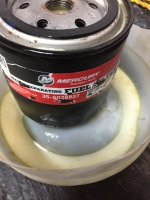
The boat I was servicing wanted to start and it fired easily, so I did a fuel pressure test and took a sample- the sample that came out was water, not gas, so I removed the fuel/water separator. The photo shows what I found. I also found that water came out of the tank when I disconnected the line from the separator, so I bypassed it and cleared the fuel line before connecting an outboard fuel tank. Once it had been cleared, the tank was attached and I had squirted some gas into the intake, I cranked it and it only took two attempts, so I moved it outside where I could connect thee water supply. It ran great. The fuel tank was completely filled with water, so that was left until later but the point is-

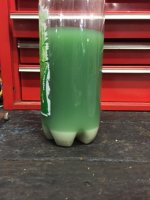
NOBODY thought to add fuel to get it to start. The bottle was one of the last samples I took and you can see that it wasn't good.

It's not hard to forget a few basic facts when trying to find the cause(s) of a problem, especially when it's for a customer's boat because there is some pressure to get it done efficiently and not waste time.

#1- an internal combustion engine needs fuel, air and spark in order to run. Correct timing is great but it can run when it's not correct, although it might be ugly.
#2- the message on hold at Indmar had tips for technicians, including "Did you know that 80% of performance problems are fuel-related?".

I use a mustard bottle for adding fuel, with a tip that can adjust the amount and flow- Add it while the engine is stopped- doing that while it's running can be VERY DANGEROUS but you can add it through the PCV line if you want.

Did they itemize the quote for the additional pump, with a separate line for labor? Post the part number for the pump, please.
 

Attachments

  • Water in gas.jpg
    Water in gas.jpg
    113.2 KB · Views: 26
  • Fuel sample.jpg
    Fuel sample.jpg
    50.7 KB · Views: 38
A simple test of the fuel system involves connecting a tank for an outboard to the fuel/water separator, but again, I haven't seen anything about the make and model of your boat and manufacturers don't build their boats in the same ways, so the setup can vary greatly.

Did they take a fuel sample? That matters. Also, 140 degrees is on the sender for the gauge but the other sender reports to the ECM, which affects performance. The gauge is only for telling you that it overheated.

The fact that it was at a Merecruiser (or any dealer of another brand) means nothing- the dealership didn't work on it, a mechanic did that and I can tell you from personal experience that troubleshooting isn't done the same way by everyone, at the same level. For example:

I was trained by Mastercraft/Indmar but I had experience from working on cars and my own vehicles- I also know someone who worked for GM at their Desert Proving Ground and we had discussed various details about cars since we're interested in many of the same details. The training allowed me to find the cause of the problem very quickly and some of the others who had worked as boat mechanics for decades came over after I got it to fire, wondering what I had done as if it was magic. Seriously- I was not impressed.

I worked for that boat dealer starting just before COVID and one of the boats assigned to me had been worked on by someone else, who decided that it didn't run because it needed a new cap & rotor, partly because "These go bad frequently"- that's a bad reason. They replaced the cap but the rotor was back-ordered, so it sat during Winter because it wouldn't have been used, anyway. That could very well have damaged the tank and the rest of the fuel system as I'll explain. I installed the new rotor and tried to start it- nothing, not even a sputter. I made sure the lanyard was in place and the switch was working, to try again. Nothing. The trainers at Mastercraft service school were interested in getting peoples' boats on the water, not spending time in the shop, so the main person talked about how he diagnosed this kind of problem. If it didn't start, he checked for spark and if he had spark, he added some fuel. If it wanted to run, it was a fuel system problem, but that only pointed in a direction.

The boat I was servicing wanted to start and it fired easily, so I did a fuel pressure test and took a sample- the sample that came out was water, not gas, so I removed the fuel/water separator. The photo shows what I found. I also found that water came out of the tank when I disconnected the line from the separator, so I bypassed it and cleared the fuel line before connecting an outboard fuel tank. Once it had been cleared, the tank was attached and I had squirted some gas into the intake, I cranked it and it only took two attempts, so I moved it outside where I could connect thee water supply. It ran great. The fuel tank was completely filled with water, so that was left until later but the point is-

NOBODY thought to add fuel to get it to start. The bottle was one of the last samples I took and you can see that it wasn't good.

It's not hard to forget a few basic facts when trying to find the cause(s) of a problem, especially when it's for a customer's boat because there is some pressure to get it done efficiently and not waste time.

#1- an internal combustion engine needs fuel, air and spark in order to run. Correct timing is great but it can run when it's not correct, although it might be ugly.
#2- the message on hold at Indmar had tips for technicians, including "Did you know that 80% of performance problems are fuel-related?".

I use a mustard bottle for adding fuel, with a tip that can adjust the amount and flow- Add it while the engine is stopped- doing that while it's running can be VERY DANGEROUS but you can add it through the PCV line if you want.

Did they itemize the quote for the additional pump, with a separate line for labor? Post the part number for the pump, please.

Mercury Mercruiser - Boost Pump Kit - Fits MCM/MIE 4.3L, 5.0L, 5.7L, 6.2L EFI/MPI Engines - 862264A7​


Mercury Mercruiser - Boost Pump Kit - Fits MCM/MIE 4.3L, 5.0L, 5.7L, 6.2L EFI/MPI Engines - 862264A7​

. As described in the mercruiser service bulletin from 1999 due to ethenol blended fuel and hot bilge temperatures, both engines were vapor locking following a short sit. This system was the fix. Simple plug and play system if you have 3/8in fuel line. Mine is 5/8 so I had to purchase the 3/8 line to run from the supplied fuel filter to the new pump. The pump only has 3/8in fittings. Less
Reviewed on ebay.com
 
. As described in the mercruiser service bulletin from 1999 due to ethenol blended fuel and hot bilge temperatures, both engines were vapor locking following a short sit. This system was the fix. Simple plug and play system if you have 3/8in fuel line. Mine is 5/8 so I had to purchase the 3/8 line to run from the supplied fuel filter to the new pump. The pump only has 3/8in fittings. Less
Reviewed on ebay.com
Why are you not using your bilge blower if the temperature is high? Are you moving most of the time or running the engine while stationary? Since you indicated that it happens after sitting, are you not running the blower before starting again, as most boaters know?

TBH, in 1999, Mercruiser was in damage control mode because they had several unsolved problems and the bulletins were more "We hope this works" than "This will definitely solve your problem". If this was a definite cure, I would think Tahoe would include it by 2015.

What is the ambient temperature when this happens? If you're not ventilating the bilge before starting, you need to. The recommended time for that is 5 minutes- the manual for your boat probably mentions this and boater safety courses do.

Your fuel line is 5/8", inside? Never seen that on a small boat.
 
temp was in 80's, Not overly hot. When starting and stopping the engine compartment cover is wide open to ventilate as a precaution. Same when back at storage area.
Not sure about fuel line size, that was copied from the description online.
I am going to try a few more experiments. E.g. I am going to run engine with rabbit ears when cold and allow to heat up to operating temp. I will then let it sit for 15 minutes and try again and see if i can exactly replicate the problem.
 
temp was in 80's, Not overly hot. When starting and stopping the engine compartment cover is wide open to ventilate as a precaution. Same when back at storage area.
Not sure about fuel line size, that was copied from the description online.
I am going to try a few more experiments. E.g. I am going to run engine with rabbit ears when cold and allow to heat up to operating temp. I will then let it sit for 15 minutes and try again and see if i can exactly replicate the problem.

Have you turned the water on when the muff wasn't on the outdrive, to see if it's coming out freely? And water comes out of the drive near the transom? What size and length of hose feeding the muff?

Have you opened the fuel filler cap while this is happening?
 
Have you turned the water on when the muff wasn't on the outdrive, to see if it's coming out freely? Yes: Water is coming out freely and exits properly near Transom, both sides equally. standard garden hose about 25 ft. I have not tied to open the fuel filler cap. Worth a try I suppose.
 
Back
Top