Logo

Honda bf20 Pressure relief valve dripping

willie420

Member
I was doing some maintenance on 2007 honda bf20 and I've noticed dripping from the threaded hole beside my thermostat housing . I've then replaced the thermostat and gasket and it is still dripping is this normal can it be blocked off with a bolt and o ring as I don't 2ant dripping water near my electrics. Any help is appreciated
 
I've attached a photo below of the old thermostat before replacing and is there a certain angle or way to put the new thermostat into it could I have it seated it in the wrong direction
 
1000013844.jpg
 
Hi

That is the engine flush port. It is one of the more useless and aggravating things Honda includes with their otherwise excellent outboards. They are "famous" for leaking there.

The threads are there to accept the "special" and over priced garden hose adapter that they sell but can't be found in the shop manual. Maybe in the owner's manual? I haven't looked.

If you want to replace the leaky valve, you will need to remove the water jacket under the thermostat housing. BUT...if you do go to the trouble and expense (the seal will likely also need replacement) of doing so, you can almost be ASSURED that, the very first time you use the port to flush your engine, the valve is almost CERTAIN to start leaking again. An unbelievable example of a bad and, to date, uncorrected design.

Can you tell yet that I don't like that little bugger?

So, to answer your question, YES, you can seal that hole with a plug to stop the leak Many owners have done just that.

But, if you use something with threads that don't match, you will damage the existing threads in the jacket and possibly create a leak path.

I can't immediately find what threads are used there. British Standard Pipe Theads (BSPT) I think but I'm not sure.

There is though a VERY GOOD reason for removing the water jacket. Especially if you operate in salt water. That's where the sacrificial anode that protects the coolant passages lives. Item 1 in the link.


I recommend replacing the mounting screw (12) and the jacket seal (9) too. The seal doesn't always fit properly after being disturbed and that screw will sieze and snap off if left in place too long. I use anti-sieze on the threads but others might disagree with doing that.


Also know that you will get a more thorough and effective flush by putting the lower end in a tank (trashcan) with enough water to cover the ventilation plate by 4 or more inches and running it. A little vinegar can help too. There are testimonials from people on this forum about removing deposits with vinegar.

Good luck.
 
Thanks
Hi

That is the engine flush port. It is one of the more useless and aggravating things Honda includes with their otherwise excellent outboards. They are "famous" for leaking there.

The threads are there to accept the "special" and over priced garden hose adapter that they sell but can't be found in the shop manual. Maybe in the owner's manual? I haven't looked.

If you want to replace the leaky valve, you will need to remove the water jacket under the thermostat housing. BUT...if you do go to the trouble and expense (the seal will likely also need replacement) of doing so, you can almost be ASSURED that, the very first time you use the port to flush your engine, the valve is almost CERTAIN to start leaking again. An unbelievable example of a bad and, to date, uncorrected design.

Can you tell yet that I don't like that little bugger?

So, to answer your question, YES, you can seal that hole with a plug to stop the leak Many owners have done just that.

But, if you use something with threads that don't match, you will damage the existing threads in the jacket and possibly create a leak path.

I can't immediately find what threads are used there. British Standard Pipe Theads (BSPT) I think but I'm not sure.

There is though a VERY GOOD reason for removing the water jacket. Especially if you operate in salt water. That's where the sacrificial anode that protects the coolant passages lives. Item 1 in the link.


I recommend replacing the mounting screw (12) and the jacket seal (9) too. The seal doesn't always fit properly after being disturbed and that screw will sieze and snap off if left in place too long. I use anti-sieze on the threads but others might disagree with doing that.


Also know that you will get a more thorough and effective flush by putting the lower end in a tank (trashcan) with enough water to cover the ventilation plate by 4 or more inches and running it. A little vinegar can help too. There are testimonials from people on this forum about removing deposits with vinegar.

Good luck.
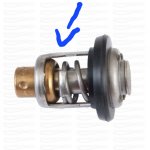
Thanks ill just block it up . Should the thermostat be inserted the with the side facing up like the image in the link or does it matter what way its inserted
 
Hi

That is the engine flush port. It is one of the more useless and aggravating things Honda includes with their otherwise excellent outboards. They are "famous" for leaking there.

The threads are there to accept the "special" and over priced garden hose adapter that they sell but can't be found in the shop manual. Maybe in the owner's manual? I haven't looked.

If you want to replace the leaky valve, you will need to remove the water jacket under the thermostat housing. BUT...if you do go to the trouble and expense (the seal will likely also need replacement) of doing so, you can almost be ASSURED that, the very first time you use the port to flush your engine, the valve is almost CERTAIN to start leaking again. An unbelievable example of a bad and, to date, uncorrected design.

Can you tell yet that I don't like that little bugger?

So, to answer your question, YES, you can seal that hole with a plug to stop the leak Many owners have done just that.

But, if you use something with threads that don't match, you will damage the existing threads in the jacket and possibly create a leak path.

I can't immediately find what threads are used there. British Standard Pipe Theads (BSPT) I think but I'm not sure.

There is though a VERY GOOD reason for removing the water jacket. Especially if you operate in salt water. That's where the sacrificial anode that protects the coolant passages lives. Item 1 in the link.


I recommend replacing the mounting screw (12) and the jacket seal (9) too. The seal doesn't always fit properly after being disturbed and that screw will sieze and snap off if left in place too long. I use anti-sieze on the threads but others might disagree with doing that.


Also know that you will get a more thorough and effective flush by putting the lower end in a tank (trashcan) with enough water to cover the ventilation plate by 4 or more inches and running it. A little vinegar can help too. There are testimonials from people on this forum about removing deposits with vinegar.

Good luck.
Is the thermostat sides installed horizontal or vertical appreciate the help 👍
 

Attachments

  • 19300-ZW9-003.jpg
    19300-ZW9-003.jpg
    173.2 KB · Views: 23
Back
Top