Logo

Water in Bilge Coming from Transom?

Kirdud

Contributing Member
Hello Captains! I’d like to share my headache with you.

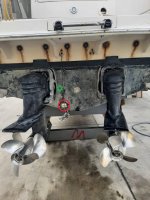
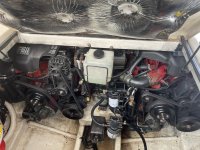
Last Tuesday, I returned to the marina and noticed that the bilge pump was discharging water. About 10 minutes later, it happened again, so I went to check the bilge. I saw that water was coming from somewhere behind the port engine.

Because of the boat’s construction, it’s difficult to find exactly where the water is coming from. After some time trying to locate the source, I decided to lift the boat.

Now, to be honest, I don’t know what to do. The boat is in dry dock. My mechanic, who usually services it, came to check but couldn’t find anything. He said, “Sorry, I can’t find the source. The construction of this boat makes maintenance very difficult, and I don’t want to work on it.”

To be honest, I understand his point—but what can I do? We have what we have.

Since I bought the boat, I’ve noticed that from time to time, after returning to the marina, there’s some water in the bilge—about a bucket or so. I clean it, and the bilge stays dry until the next trip. But now it’s leaking constantly, regardless of whether the engine is running or not.

Maybe someone could share their thoughts on what it could be?

2 x VOLVO PENTA 4.3 OSI-E, XDP-B
 

Attachments

  • Image (2).jpg
    Image (2).jpg
    280.3 KB · Views: 48
Put the boat back in drydock and try filling the bilge with water and see where the water comes out of. That's a pretty good drip so it should be easy to see. I'd be looking at the engine to sterndrive bellows as a possible source, which should be able to repaired from the outside on drydock. The sterndrive unit itself is not highly regarded.

Volvo Penta XDP-B Sterndrive
  • Type: Aquamatic sterndrive with a cone clutch for smooth shifting.
  • Key Issues:
    • Design Flaws: The drive is known for several design issues, including split housings, damaged skegs, and leaking seals/bellows.
    • Water Intrusion: Common problems involve water leaks through the shift cable area or damaged bellows, leading to gear oil contamination (milky oil in the reservoir).
    • Parts Availability: The XDP-B drive has been discontinued by Volvo Penta, and most parts (other than basic consumables like bellows and prop nuts) are no longer stocked and are difficult to find.
    • Resale Value Impact: The presence of an XDP drive can significantly reduce a boat's market value due to the risk of failure and impossibility of repair with new parts.
 
Put the boat back in drydock and try filling the bilge with water and see where the water comes out of. That's a pretty good drip so it should be easy to see. I'd be looking at the engine to sterndrive bellows as a possible source, which should be able to repaired from the outside on drydock. The sterndrive unit itself is not highly regarded.

Volvo Penta XDP-B Sterndrive
  • Type: Aquamatic sterndrive with a cone clutch for smooth shifting.
  • Key Issues:
    • Design Flaws: The drive is known for several design issues, including split housings, damaged skegs, and leaking seals/bellows.
    • Water Intrusion: Common problems involve water leaks through the shift cable area or damaged bellows, leading to gear oil contamination (milky oil in the reservoir).
    • Parts Availability: The XDP-B drive has been discontinued by Volvo Penta, and most parts (other than basic consumables like bellows and prop nuts) are no longer stocked and are difficult to find.
    • Resale Value Impact: The presence of an XDP drive can significantly reduce a boat's market value due to the risk of failure and impossibility of repair with new parts.
Thank you, but filling the bilge with water could actually be the problem. In my opinion, the leak itself is not at the bottom but somewhere around the middle of the boat, about 20 cm higher.
The mechanic also mentioned the holes that were sealed with silicone after the transom transducer was removed, but those seem to be lower than the point where the leakage is coming from.

Are there any hoses between the drive and the engine? Cooling hoses maybe? Could water come in even when the engine is off?
Last year, both drive bellows were replaced, but the exhaust was not changed — the mechanic said they were fine.

Ahh… about those last two points, all the mechanics told me the same thing! I guess I’m lucky — what can I do? 🥹
 

Attachments

  • Image (3).jpg
    Image (3).jpg
    247.8 KB · Views: 53
Hello, Captains! I plan to remove the engine to access the transom. Do you have any recommendations for what else we should check and replace, since some parts are easy to reach once the engine is moved?
 
hi did you find out where the water is leaking from? I have the same boat and same issue water in the middle part of the bilge
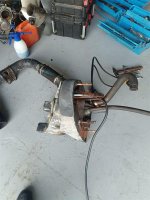
Hi Joseph! Yes, I found the issue. The problem was a leak in the port side transom. Over the past two years, I had noticed some water entering the bilge after going out and returning, but only now, when the leak became so fast and severe, did I start investigating.

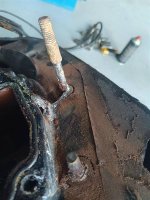
Unfortunately, in our type of boat, there isn’t enough space to inspect the area behind the engine, so it was decided to remove the engine, which proved to be tricky. The result is that during the leaking, everything was corroded the Y-pipe, the transom bolts, and everything around it. Therefore, I had to find a used transom and reinstall it.

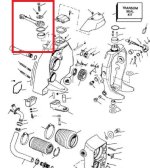
In my case, the problem was the part highlighted in red in the photo, but in any case, to replace it, the engine needs to be removed. Removing the transom requires taking out the engine, which is a big job.

If you remove the engine, it’s also a good opportunity to service it. I have now replaced the ignition coil due to corrosion, as well as the fuse box, Y-pipe, and all seals. I’ve also decided to replace the manifolds and risers on both engines.
 

Attachments

  • Screenshot 2026-04-06 134943.jpg
    Screenshot 2026-04-06 134943.jpg
    69.5 KB · Views: 27
  • Image (6).jpg
    Image (6).jpg
    69.6 KB · Views: 27
  • Image (14).jpg
    Image (14).jpg
    75.1 KB · Views: 26
  • Image (8).jpg
    Image (8).jpg
    63.3 KB · Views: 30
  • Image (7).jpg
    Image (7).jpg
    372.1 KB · Views: 25
Hi Joseph! Yes, I found the issue. The problem was a leak in the port side transom. Over the past two years, I had noticed some water entering the bilge after going out and returning, but only now, when the leak became so fast and severe, did I start investigating.

Unfortunately, in our type of boat, there isn’t enough space to inspect the area behind the engine, so it was decided to remove the engine, which proved to be tricky. The result is that during the leaking, everything was corroded the Y-pipe, the transom bolts, and everything around it. Therefore, I had to find a used transom and reinstall it.

In my case, the problem was the part highlighted in red in the photo, but in any case, to replace it, the engine needs to be removed. Removing the transom requires taking out the engine, which is a big job.

If you remove the engine, it’s also a good opportunity to service it. I have now replaced the ignition coil due to corrosion, as well as the fuse box, Y-pipe, and all seals. I’ve also decided to replace the manifolds and risers on both engines.
You coud buy one of these for looking into tight spots- $30 on Amazon.

1775479791546.png
 
I agree with your mechanic, it is very difficult to work on but give you a lot of credit for taking on the repair! This is a problem with most sterndrive or I/O boats, the are prone to transom leaks as they age, in areas that are basically inaccessible with the engine in place. When you have the engine out, also check the starter, the oil pan and the power steering actuator and hydraulic hoses for it, they are all basically inaccessible with the engine in place.
I am not anti-sterndrive, but I would not ever own a twin engine I/O set up like that, the only ones I'd buy are:
1) Mercruiser powered for easy parts availablity
2) single engine but wide open engine compartment
3) pre-2010 at least here in the USA, I will not ever accept an inboard of any kind with a cat converter exhaust, I feel it is a complex, unnecessary and potentially dangerous heat generating device in the bilge of inboard fiberglass boat. The regulators responsible for this abomination should be fired, it puts people in harm's way, if the impeller fails, the boat's rubber exhaust hoses will fail and the boat can quickly take on water.
 
I agree with your mechanic, it is very difficult to work on but give you a lot of credit for taking on the repair! This is a problem with most sterndrive or I/O boats, the are prone to transom leaks as they age, in areas that are basically inaccessible with the engine in place. When you have the engine out, also check the starter, the oil pan and the power steering actuator and hydraulic hoses for it, they are all basically inaccessible with the engine in place.
I am not anti-sterndrive, but I would not ever own a twin engine I/O set up like that, the only ones I'd buy are:
1) Mercruiser powered for easy parts availablity
2) single engine but wide open engine compartment
3) pre-2010 at least here in the USA, I will not ever accept an inboard of any kind with a cat converter exhaust, I feel it is a complex, unnecessary and potentially dangerous heat generating device in the bilge of inboard fiberglass boat. The regulators responsible for this abomination should be fired, it puts people in harm's way, if the impeller fails, the boat's rubber exhaust hoses will fail and the boat can quickly take on water.

Call the EPA, the State of California and CARB- they're the ones who mandated O2 sensors and Cat converters.

To be fair, too many boats are on the water leaving an oil slick and polluted air because of neglect, bad maintenance (on schedule, but not performed correctly) and people working on their own without knowing anything more than how to replace parts. Boats tend to be calibrated to run richer than cars in order to prevent the problems that come with running too lean and because pushing a boat with inefficient hull design requires more fuel, but the agencies seem to think boats can be as fuel efficient and produce the low emissions of cars. They can't.

Personally, I think EVERYONE who designs boats should be forced to service them (all brands) for at least one year, so they might understand that the way they're doing it is a royal PITA for those who have to reach parts that are almost or literally inaccessible.

Have you seen any info about Bioutanol 16 (BU-16)? I found this on the Indmar site a few minutes ago-

"Indmar and the National Marine Manufacturers Associationencourage the use of Biobutanol in marine engines.Biobutanol (either isobutanol or n-butanol) is created from biomass and is blended with gasoline to help meet renewable fuel mandates and clean air standards. Bu16 contains a higher percentage (16%) of renewable fuels than traditional E10 gasoline (10%), without sacrificing engine performance or reliability. Bu16 can be mixed with any E10 or other approved fuel already inthe boat’s fuel tank(s). Biobutanol is chemically different from ethanol and does not have ethanol’s negative characteristics when blended in fuel. The Bu16 fuel blend does not absorb water like E10; the phase separation common in E10 fuel does not occur in Bu16. Isobutanol is not a corrosive agent (ethanol is highly corrosive) and will not damage fuel system parts. These characteristics, combined with a significantly higher energy content, make Bu16 fuel ideal formarine engines."
 
I have not seen that, but the question is why oh why can't we just have straight GAS?!!! Like in the general aviation sector! for safety for boaters especially!
And yes I am going to write to Lee Zeldin, who is the director of the EPA about 2 things that are an unfair, and un-requested burden on taxpayers created by self important un elected bureaucrats:
Cat converters on inboard boats
CARB cat converters for those who don't live in Cali but unfortunately have a foolish legislature who voted in CARB standards, without ONE THOUGHT what that means to consumers:
CARB cat converters cost 2-3x as much as federal
CARB has an excessively strict cert process for aftermarket converters, so much so that only a few companies will go through the expense to get theirs certified, so they have an essential monopoly on the aftermarket cat market. It is a money grab and nothing else.
 
I have not seen that, but the question is why oh why can't we just have straight GAS?!!! Like in the general aviation sector! for safety for boaters especially!
And yes I am going to write to Lee Zeldin, who is the director of the EPA about 2 things that are an unfair, and un-requested burden on taxpayers created by self important un elected bureaucrats:
Cat converters on inboard boats
CARB cat converters for those who don't live in Cali but unfortunately have a foolish legislature who voted in CARB standards, without ONE THOUGHT what that means to consumers:
CARB cat converters cost 2-3x as much as federal
CARB has an excessively strict cert process for aftermarket converters, so much so that only a few companies will go through the expense to get theirs certified, so they have an essential monopoly on the aftermarket cat market. It is a money grab and nothing else.
The marine industry, marine manufacturers, consumer groups and probably all of the small engine and automotive industry have spent years fighting Ethanol and before that, MTBE. MTBE was the predescessor and was only removed once it was found in Lake Tahoe and possibly the groundwater near it, so they decided on the next worst thing- Ethanol. My friends' Carver yacht has a small plastic plate riveted to the walkway next to the fuel filler cap with 'Using gas with alcohol is hazardous'. That boat was made in 1989.

CARB doesn't care about consumers, they care about funding and power.

Boats won't fall out of the sky if the fuel collects water- that's the reason aircraft can't use it and even without Ethanol, one of the re-flight tasks is checking the fuel for contamination.

I'm all for clean burning engines, but not when the anti-pollution parts create enugh heat to cause a fire. Even with automatic fire suppression, the damage could total the boat.
 
Think about the possible scenario on an inboard boat, the exhaust overheats, the rubber hoses between the elbows and the Y pipe melt and guess what, water could start rushing in via 2 3.5" diameter holes. Just for the fool regulators, do they even know how hot catalysts get? To read properly they start at 600*F and the ones I have monitored via live data streams (automotive) run at 1,100*F. That is INSANE.
For this reason alone, outboards are the only "safe" propulsion for smaller boats.
 
Think about the possible scenario on an inboard boat, the exhaust overheats, the rubber hoses between the elbows and the Y pipe melt and guess what, water could start rushing in via 2 3.5" diameter holes. Just for the fool regulators, do they even know how hot catalysts get? To read properly they start at 600*F and the ones I have monitored via live data streams (automotive) run at 1,100*F. That is INSANE.
For this reason alone, outboards are the only "safe" propulsion for smaller boats.
Internally, the temperature is very high but the housing has to prevent combustion of nearby materials. I stopped working at ski boat dealers before the O2 or Cat systems came along, but the last time I went to Mastercraft training, the owner of the shop that was teaching service techs was developing his own O2 sensor that was protected from water in the exhaust (true inboards, not sterndrive)- this was in 2001. The Cat converter in Indmar engines is in the Y manifold and none of these holds up after exposure to water.

I can get more info- I know and worked with the technical coordinator at Mastercraft. I know the Coast Guard wouldn't allow using cnverters that are so hot they could cause combustion of anything in an engne compartment- they didn't even want to allow in-tank fuel pumps until after Alan (owner of the shop where we trained) showed the results from three years of in-shop and on-water testing)- I remember the words used by the Coast Guard guy when Alan went to Wash DC to get approval- "Not in my lifetime". When they took a break, the others at the CG told him "We'll work on him during lunch". He got a conditional approval and eventually, full approval.

I just sent a message to Will, asking " how do they contain the heat inside and how does this affect the exhaust temperature?". I'll post his answer.

WRT outboards being safe from use of catalysts, check this out, from 2010-

 
Last edited:
The reply- "Water jacketed-
You’re somewhere between six and 900° in exhaust temps at the converter, but the entire manifold is water jacketed".

I also asked if they shut off the engine in the event that the raw water stops and he replied "You would probably see a Derate engaged based on stage one and stage two engine overheats. We are no longer allowed to shut down the engine, but rather have to give a consumer a choice of driving it until it fails so they have the opportunity to escape a potential harmful situation like a storm"- cars have limp home mode, boats are subject to the Coast Guard.
 
Last edited:
Thanks for all this info! Water jacketed is great as long as you have water flow. Yes conventional exhaust can overheat but they don’t get as hot as far as I know. Had that happen once. Manifolds go to about 400* yet the rubber hoses didn’t leak. That alone was enough for me to go with outboards next time. Believe it or not those manifolds didn’t crack!
 
Thanks for all this info! Water jacketed is great as long as you have water flow. Yes conventional exhaust can overheat but they don’t get as hot as far as I know. Had that happen once. Manifolds go to about 400* yet the rubber hoses didn’t leak. That alone was enough for me to go with outboards next time. Believe it or not those manifolds didn’t crack!

Lack of water flow is the reason I asked about the exhaust system, specifically if it was fiberglass or metallic and if metallic, if it was wrapped with something similar to a welding blanket. The fuel lines have been protected from heat and impact/cutting/harsh chemicals since Indmar/Mastercraft introduced in-tank fuel pumps but this level of heat is something that I would be wary of.

I'm an example of someone who sholuld have known better, but didn't inspect my boat as well as I should have- it was advertised as 'had a bit of an overheat", but what that pinhead failed to do is: tell the truth. He redefined 'overheat'. Bent valve, warped head, killed all of the rubber and plastic between the exhaust manifold and exhaust port on the lower unit.

The first thing I check after a suspected overheat on an inboard, especially ski boats- the exhaust flanges. If the flaps are melted (or gone) and the inside of the flanges have blisters, I know. The next step is t squeeze the exhaust hoses- if they're very soft, I shine a light into the exhaust flanges and look at the inside of the mufflers (unless it's a V-drive).

One thing that would keep me from buying a boat with a big outboard is the extreme price. I would definitely like the extra space inside of the hull, though and with modern outboards running so smoothly & quietly, it's an attractive option.

Having worked at a dealer where newer Mercury outboards were coming in with problems, I will say that the technology being used is leaving a lot of service techs in the dust. With Mercury's DTS (Digital Throttle and Shifting), if someone doesn't know how the system operates, they'll be wasting A LOT of shop time and customer money. If it's under warranty, the shop gets paid by the book, not the whole anmount of time needed by fumbling for answers. The first time I heard about one of those was at the end of my first week at a dealership- a pontoon boat had come in with weird shifting, where the lever could be moved to Forward, but it would stay in Neutral, go to Reverse or to Forward, but there was no clear pattern.

I hadn't done the DTS training, so I didn't know that in this system, the tach is the brains of the operation. If that goes bad, all bets are off.

OTOH, the first time I went to Indiana for Mastercraft training, the day we worked on electrical testing, circuits, diagnosis, etc, one part of the test involved using a Bosch-style relay to toggle between poweing a bilge blower and a light. A small group was staring at the relay like Dan Aykroyd & Steve Martin on SNL while squinting and asking "What the hell is that?". Had absolutely no idea what to do with it, even though the shell has a diagram on it. And these guys were supposed to service fuel injection? I doubt they passed the test and that should have meant that their employer kept them working on non-injected boats but they were from West Virginia or somewhere, so I never saw them again. That was more than 25 years ago and I know they want the techs to know the diagnostic methods- I have stayed in contact with some of the people I worked with, including the owner of the shop where we trained and the guy I contacted yesterday who actually works for Mastercraft.
 
I think that's a problem across both the automotive and the marine industries.
That's one reason why I like my old school engine, any mechanic who knows carbs could work on it, myself I can do all the work still without specialized equipment and nothing more than a tach/dwell, timing light and test light. Just like back in the old days!
I still have a Prestolite points distributor!
Old school tune up.jpg
 
I think that's a problem across both the automotive and the marine industries.
That's one reason why I like my old school engine, any mechanic who knows carbs could work on it, myself I can do all the work still without specialized equipment and nothing more than a tach/dwell, timing light and test light. Just like back in the old days!
I still have a Prestolite points distributor!
View attachment 36851

I have the same timing light!

I agree that the old engines are easy for most to service and repair, but the emission requirements aren't going away anytime soon and the only way to hit those numbers is with new tech, but whoever sets the requirements must be living in a vacuum because they certainly understand NOTHING about servicing, longevity, real-world use and how Ethanol absorbs water, regardless of the number of times manufacturers and industries tell them.

Nice thing about points- if the gap closes and hte engine won't start, carrying somethiing that's the same thickness as the needed gap is convenient- my friends' Carver had a problem with one of the engines when we were on Lake Michigan and needed both to run, so I took a look. I don't remember if it had no gap or if it was just less than what it needed, but I pulled out my wallet and grabbed a .73mm thick guitar pick- just under .029"- I added a little more gap and it ran great afterward.
 
Agreed with all your points. I do like my EFI engines in my Jeeps, honestly I have not had to do anything fuel system related to them (knock on wood) and one is 28 years old (185,000 miles, 4.0 six) and the other is 19 years old (135,000 miles, 5.7 V8). They just start and run well all the time. But in boats with long storage intervals, the systems don't seem to do as well carb or EFI. Problem with EFI is that for older boats, the parts become NLA (like engine ECMs, etc) which is a big problem. With carbs you can always find parts, I can get parts for a Quadrajet that has not been made in over 30 years, and Holley and Edelbrock parts are everywhere. Of the 3 I think the Edelbrock is the easiest to work on and the least trouble prone for marine use. Both the Q-Jet and the Holley may be more tuneable, but if you just want something that works consistently, the Edelbrock meets that need.
In the future when I winterize the boat I am going to change the fuel filter then and fill it with VP Racing 94 octane E0 fuel, so when I run it to fog it the carb will be stored with that in it vs the E10 we are forced to use. Points vs electronic, well electronic works till it doesn't whereas points will keep working despite running worse and worse. Can be fixed on the side of the road (my 1965 VW Beetle 1200) or on the mooring (my 4.3 OMC Cobra). I do carry spare points and a nice clean feeler gauge and also a spare dwell meter believe it or not!
 
Agreed with all your points. I do like my EFI engines in my Jeeps, honestly I have not had to do anything fuel system related to them (knock on wood) and one is 28 years old (185,000 miles, 4.0 six) and the other is 19 years old (135,000 miles, 5.7 V8). They just start and run well all the time. But in boats with long storage intervals, the systems don't seem to do as well carb or EFI. Problem with EFI is that for older boats, the parts become NLA (like engine ECMs, etc) which is a big problem. With carbs you can always find parts, I can get parts for a Quadrajet that has not been made in over 30 years, and Holley and Edelbrock parts are everywhere. Of the 3 I think the Edelbrock is the easiest to work on and the least trouble prone for marine use. Both the Q-Jet and the Holley may be more tuneable, but if you just want something that works consistently, the Edelbrock meets that need.
In the future when I winterize the boat I am going to change the fuel filter then and fill it with VP Racing 94 octane E0 fuel, so when I run it to fog it the carb will be stored with that in it vs the E10 we are forced to use. Points vs electronic, well electronic works till it doesn't whereas points will keep working despite running worse and worse. Can be fixed on the side of the road (my 1965 VW Beetle 1200) or on the mooring (my 4.3 OMC Cobra). I do carry spare points and a nice clean feeler gauge and also a spare dwell meter believe it or not!

Long storage intervals shouldn't matter, but the way it's prepped makes all the difference. The exhaust, intake and fuel tank vent should all be sealed and at the throttle body & exhaust, dessicant packs should be inside of the seal. The fuel tank vent should be taped, too- the tank should be as empty as possible, to prevent bad gas, but I can say from experience that the StaBil Marine stabilizer works, even if the tank vent wasn't sealed because someone (me) forgot. My boat sat for almost two years because of the bad seals in the upper GC which took longer to repair than I wanted for several reasons and we get some wild temperature fluctuations during Winter and Spring. The gas smelled like it was fresh and looked clear, without any hint of water.

When Mastercraft started using fuel injection in their boiats, they chose GM, partly because Ford had exited the marine market and Indmar was able to satisfy the demand and design requirements. At that time, the pump wasn't in the tank, it was the typical Chrysler-style, placed next to the engines. Then, they decided to use the in-tank pump so the pressure could be higher and that worked great, until MTBE came along, later replaced by Ethanol- neither of these was good for the fuel pump impellers. Aside from the fuel pump, ECM and a few other items, all of the parts are available at just about any auto parts store. Mastercraft was later bought by Roger Penske and the engines were supplied by Ilmor, one of his other companies.

As far as tuning, Indmar, Mercruiser, Supra. Moomba and others used the Delphi Mefi controllers although Mercruiser also used these from Motorola. All Mastercraft tuning was developed by the shop where we were trained, in Indiana- MC introduced fuel injection in late-'93 with the Corvette LT-1 and the next year, the throttle body versison was available. That shop had three dyno rooms at the time and they're near the largest lake in Indiana, so on-water testing is easy but during Winter, they would go to GM's Desert Proving Ground or Corona CA, where Indmar has a facility. Occasionally, updates were needed and they would finalize those, e-mail the files to the dealers and we would load them into a laptop before going to the boats if they weren't brought to us.

I updated a 2000 Mastercraft ProStar at the lake- the boat owner called to say that it had a hot hard start problem, so I made a few phone calls to get the details from Indiana and the laptop with the files was at my shop later that afternoon. I called the boat owner to request that they run the boat to normal operating temperature so I could verify the problem when I arrived. Once I had done that, I saved the original file, loaded the new one and cranked it- started normally and the whole re-tune took about 5 minutes. The problem was caused by Rochester deleting the idle air hole in the throttle plate, but didn't tell Indmar or Mastercraft and that was deleted after the development was finalized and boats were being produced. The shop in Indiana knew about it when I called, but it was a new problem and it really wasn't quite ready for release in a tech brief.

I bought my Chevy Silverado because I knew the system well and that makes any diagnostics much easier than learning someone elses' version, even if they're basically similar. That truck probably had more than 300K miles and I don't remember replacing the fuel pump- I know I didn't replace/clean the injectors or any parts dedicated to the injection system other than the knock sensor. The EGR had to go, but everything else was just maintenance. I bought a 2005 Astro van in 2011 and likewise, no parts for the injection- that's still going strong with 290K miles. My boat has a carb and even though it shows no indication of any work or disassembly done to it, it runs great even though it's 42 years old. Have to say that carbs can definitely get the job done for a long time with minimal problems, as long as they're not abused.
 
Back
Top