Logo

5.7 MPI starts to stumble after flawless 1 hour run

RyDrew

New member
Hi all, new owner of a 2004 Carver 360 Mariner with twin 5.7 MPI's.
Sea trial no problem. First hour and a half of drive home after purchase was perfect at 3,600 rpm. Both fuel tanks registered at 1/4 tank (125 gal each). At this point the starboard engine started stumbling badly and revs dropped way down. The captain thought that maybe the gage was incorrect and we were running out of fuel so we stumbled in on the port engine to get gas. Put in 60 gallons each tank and the gages both went back up to over 3/4. Started right up and we continued the voyage. Ran great again so we assumed problem solved. Ran another hour and the same thing happened. At this point we were only a few miles from home and we knew we had fuel so he dropped the throttle way down on starboard and ran 80% on port engine. After a couple more miles and nearing home port, the starboard engine started running smooth again. We ran the rest of the way at a reduced speed and got into port nicely.

Note: new fuel pumps and fuel coolers installed this past winter by P.O. Only about five hours this season.

I read through a lot of posts here and have seen several similar issues pointing to several solutions. What I'd like to hear opinions on is the best sequence to start the trouble shooting process. Possible ideas from what I've seen here and elsewhere:

1. Fuel Polish
2. Large particle filter/water seperator
3. Small particle filter before pump
4. Anti-siphon valve (not sure if I have one)
5. Fuel Vent tube
6. Fuel pressure
7. Something else?

Thanks.
RyDrew
 
could be the crud in the tank is getting stirred up with the boats motion...enough collects on the fuel tank pickup tube's screen and fuel starvation starts....could be stale fuel as a contributor too.

verifying fuel pressure is always a good idea with MPI engines...but, you need to do it when the problem occurs to see if that's a contributor....

I'd also check the o-rings on the fuel filler cap...especially with it being new to you..
 
Anti-iphon valves are normally installed as the next valve where the fuel leaves the outlet of the tank. Normally attached to the fuel tank outlet. I had the same problem with a Crusader 350 and it turns out it was gunk in the anti-siphon valve.....$4.99 fix......running well since.
 
If there is a clog in the anti-siphon valve or pick up tube normally it will manifest itself in trying to plane the boat, or the boat may plane with a significantly reduced rpm but it will usually be apparent immediately, not after an hr. However, if possible it is a good idea to go through the basics in the fuel system before delving into the EFI or ignition system. I would say first run it on an outboard tank but you'd need a very big one to run a V8 for an hour before it acts up! I have a 6 gallon one and was dealing with this exact problem. As soon as I hooked up the outboard tank the boat drove normally, jumping up on plane and reaching 4900 RPM @ WOT. So I know it's the anti-siphon valve, or pick up tube (or both). BUT I should have done that first, because I rebuilt the Quadrajet and replaced the points and condenser in the old Prestolite mechanical advance distributor first! Hindsight is 20/20.
Q-Jet rebuild.jpg
Prestolite.jpg
Outboard fuel tank for testing.jpg
 
Thanks everyone.
Seeing as I know the fuel pumps, coolers and filters were all done in the past year or so, I will focus on some of the simple things..
-Anti siphon valve
-Filler cap gasket
- venting
-gas
 
Have you taken a fuel sample at the throttle body? Does this fuel line have a Shrader valve? Use that and a fuel pressure gauge to collect the sample when you test the fuel pressure. You checked that too, right?
 
If these engines have a conventional external can style ignition coil I would consider swapping them between the engines.
 
The mechanic could not recreate the problem as is happens only after a long run. So I was checking out things before spring launch and i noticed that the return line has a kink. The marina for the previous owner replaced the fuel pump and cooler and must have kinked the return line when doing the repair. The fuel line is discontinued by Pleasure Craft but they had a couple left. Should be here in a couple days. Launch is scheduled for early May.
 
The mechanic could not recreate the problem as is happens only after a long run. So I was checking out things before spring launch and i noticed that the return line has a kink. The marina for the previous owner replaced the fuel pump and cooler and must have kinked the return line when doing the repair. The fuel line is discontinued by Pleasure Craft but they had a couple left. Should be here in a couple days. Launch is scheduled for early May.
I never saw an answer to my question about taking a fuel sample- that can save a lot of time if you find something in the fuel.

Look on the side of the boat for a vent, but look inside of the boat for clues as to where it might be- they're not always on the transom. If you want to find out if the vent is plugged, open the filler cap a bit while the problem is occurring- if it stops, that's the likely cause.
 
Just a follow up to my post above. I
Pulled the fuel pick up tube & anti siphon valve & tested both with a vacuum gauge. BOTH TESTED FINE!. So it was…30 gallons of fuel gone bad. Had the tank pumped out and will fill it with Sunoco 94 ethanol free gas.

PS the gas that went bad was stabilized e10 89 octane fuel.

Point being unless we follow a true process of elimination it is really easy to miss the true cause

I replaced the old anti siphon & fuel pick up tube while I was in there but truth be told, it wasn’t the cause, both were clear & not leaking vacuum.
 
Last edited:
Just a follow up to my post above. I
Pulled the fuel pick up tube & anti siphon valve & tested both with a vacuum gauge. BOTH TESTED FINE!. So it was…30 gallons of fuel gone bad. Had the tank pumped out and will fill it with Sunoco 94 ethanol free gas.
PS the gas that went bad was stabilized e10 89 octane fuel.

The last boat dealer I worked for uses stabilizer with Volvo-Penta brand and it seemed to work well, but if too much water is in the gas, all bets are off. I use Stabil Marine for my boat and yard machines and it works well- I didn't use my boat for more than two years after taking it out after extensive repairs and when I checked it last Fall, it looked and smelled like fresh gas. I did add to what was in the tank to fight off Octane loss, but it ran great. I never have problems with starting my yard machines and most of the time, they're running after the first pull (I pull slowly a few times, to build compression and draw gas into the tank before trying to start them).

I wouldn't recommend regular Stabil- it's not made for gas with Ethanol, but they have a version that is. That one is blue, not red.
 
You know this is the first time in 23 years with the same boat that I had that happen! After I burn up this tank I will have to go back to the E10 93 because that’s all the gas docks here sell. So I’ll switch to the blue marine Stabil then.
 
Anti siphon valve and pick up tube.jpg
Anti siphon vale, pick up tube and fuel line replaced.....jpg
Fuel pick up tube and antisiphon valve test for vacuum leaks.jpg

testing old pick up tube and anti siphon valve for vacuum leaks, passed! Replaced with new anyway but, process of elimination!
 
View attachment 36935View attachment 36936View attachment 36937
testing old pick up tube and anti siphon valve for vacuum leaks, passed! Replaced with new anyway but, process of elimination!
Hey Lou, not the end of the world but just wanted to point out that it sort of appears your pickup tube might be missing the screen wrapped around at the bottom end or some now appears to have a filter on the inside such as this type, https://m.media-amazon.com/images/I/71mTbNK+PqL._AC_SL1500_.jpg

That mentioned, i believe some may not have had one too while others might be floating around somewhere in there. :)
 
I did a bit of searching and the consensus was that as long as you have a good filtration system the screen is unnecessary and can cause problems as we know. Onething though is that does move the point where you could have a clog from the screen to the anti siphon valve but it is what it is. My original anti siphon was replaced back in 2004 due to a similar problem, fuel starvation, but from then till now, I never had another problem with the anti siphon valve. The mechanic who was helping me with it then said the anti siphon was stuck due to corrosion (aluminum) he replaced it with an OEM Evinrude/Johnson/OMC one (brass).
When it ran great on the outboard tank, I was SURE it HAD to be the anti siphon or the pick up tube screen (unbeknownst to me there was none). After all I never had gas that was less than a year old go bad on me in 23 years with the same boat.
Imagine my surprise when I found both were just fine. I tested the anti siphon with a vacuum gauge and it opened at 1-2" of mercury vacuum and I tested both together with the end blocked off and they held vacuum for over a day. So there was nothing at all wrong with them that could have contributed to my problem, it left only the gas as the culprit. And yes I made sure the fuel tank vent was open! Just goes to show you that you have to check every thing along the line of causes, and assume nothing.
I replaced both but saved the old ones, and used the same OEM brass anti siphon valve.
Fuel removal service.jpg

cost a bit of money but worth it to me....got rid of 30 gallons!
in my neck of the woods, this is "THE GUY"....
 
Last edited:
View attachment 36935

View attachment 36936

View attachment 36937
testing old pick up tube and anti siphon valve for vacuum leaks, passed! Replaced with new anyway but, process of elimination!
Did your bilge/engine compartment become flooded at some point? That's a lot of grunge on the top of the tank.

Does your vent hose hang lower than the fuel line at any point where it could pull water in if it has cracked?

When I bought my boat, I saw cracks on the filler hose, fuel line and vacuum hose & water line from the transom, so I replaced them. I saw it as cheap-ish insurance, since the boat had been treated like a farm animal, mechanically.

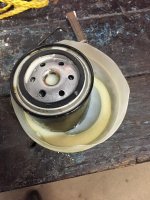
How often do you replace the fuel/water separator can?
 
No as far as I know it was never flooded that is pretty typical for an original 38 year alu tank here. The crud on the tank I is just accumulated dirt that I was too lazy to clean, lol. Don't think the vent hose pulled in water either. I do change the fuel/water separator every spring, always dump the gas out, and it never showed a sign of either debris, or water. However, with E-10 fuel which is all the gas docks here sell, you wouldn't see it unless it was really bad and you had phase separation. Never have seen that, in over 20 years with this boat. It always looks like this:
gas from boat .jpg
gas from boat 2021 season.jpg


So how do my gas samples look to you?
 
No as far as I know it was never flooded that is pretty typical for an original 38 year alu tank here. The crud on the tank I is just accumulated dirt that I was too lazy to clean, lol. Don't think the vent hose pulled in water either. I do change the fuel/water separator every spring, always dump the gas out, and it never showed a sign of either debris, or water. However, with E-10 fuel which is all the gas docks here sell, you wouldn't see it unless it was really bad and you had phase separation. Never have seen that, in over 20 years with this boat. It always looks like this:
View attachment 36941View attachment 36942

So how do my gas samples look to you?
Do you replace the fuel/water separator, or just dump it out? While branded parts are great, it's probably possible to find a less expensive generic one, to save money (since they're not always checp).

Do you see any water droplets after the gas sits undisturbed? If so, I would recommend replacing the separator cartridge.

Color seems OK, looks a tiny bit clouded, but it's easier to tell in person. As long as you don;t see water or an opaque layer at the bottom, you should be OK.

I hate the fact that we don't have a choice WRT Ethanol- it's a terrible idea and I'm surprised the Coast Guard allows it, considering their paranoia about devices and products that are actually safe, but limited or unapproved. If you go to ski boat forums, you'll see that in-tank fuel pumps started to fail as soon as MTBE was introduced, followed by Ethanol. The impellers swelled and wouldn't pump fuel and it was all caused by the additives. Electro-Mechanical pumps probably won't swell, but water in the fuel can still damage them and with a mechanical pump that has a rubber membrane, the Ethanol doesn't do it any favors, either.
 
I always replace the filters yearly, my boat has an old school Carter mechanical fuel pump, and these seem to tolerate E10 pretty well. I upgraded the accel pump on the Quadrajet to one that is good with E10 (from Cliff's High Performance Quadrajets). The first fuel pump lasted about 30 years, I replaced it because it looked quite corroded, but truth be told it was still working fine.

My conclusion with my lousy season last year was that the gas went bad, I went through EVERYTHING, the ignition (points, condenser, cap etc) and carb (cleaned and rebuilt) pick up tube and anti-siphon, (Not the cause) so that was the only thing left. When I ran it on the separate outboard tank (which took the boat's fuel system out of the question) it ran GREAT. Didn't think of bad gas because that's never happened to me before! But when I saw that the anti-siphon and pick up tube were fine, I realized I never thought of that but there was nothing left.
So, lesson learned, assume nothing, leave no stone unturned.

I have wondered if it would be worth going to the Racor style filter for inboards (Metal bowl) but they are a pain to take apart, more points for a possible leak. Supposed to be the best filter on the market though.
Thoughts? I have one in the garage, but in the past I never had a problem using OEM (BRP/Evinrude) can filters. Some years back I took one apart and found it a real pain to get that bowl off. I know they make a special wrench just for that. Most outboard guys do use them. Inboards, not so much.
 
I always replace the filters yearly, my boat has an old school Carter mechanical fuel pump, and these seem to tolerate E10 pretty well. I upgraded the accel pump on the Quadrajet to one that is good with E10 (from Cliff's High Performance Quadrajets). The first fuel pump lasted about 30 years, I replaced it because it looked quite corroded, but truth be told it was still working fine.

My conclusion with my lousy season last year was that the gas went bad, I went through EVERYTHING, the ignition (points, condenser, cap etc) and carb (cleaned and rebuilt) pick up tube and anti-siphon, (Not the cause) so that was the only thing left. When I ran it on the separate outboard tank (which took the boat's fuel system out of the question) it ran GREAT. Didn't think of bad gas because that's never happened to me before! But when I saw that the anti-siphon and pick up tube were fine, I realized I never thought of that but there was nothing left.
So, lesson learned, assume nothing, leave no stone unturned.

I have wondered if it would be worth going to the Racor style filter for inboards (Metal bowl) but they are a pain to take apart, more points for a possible leak. Supposed to be the best filter on the market though.
Thoughts? I have one in the garage, but in the past I never had a problem using OEM (BRP/Evinrude) can filters. Some years back I took one apart and found it a real pain to get that bowl off. I know they make a special wrench just for that. Most outboard guys do use them. Inboards, not so much.

If the boat say near water for any length of time, I would assume water entered through the vent, but it's nt easy to verify after the fact. Do you store the boat outside, or inside and in either case, do you prop the engine cover open, so air can circulate? I have seen more boats with a lot of condensation on the engine when the cover was left closed.

I like the type of separator that you have- easy to change using an oil filter wrench and they just tend to work.

You can add a screen filter that goes in the tank- ski boats have had those for a long time and they help but when the filler cap is left off, as I have seen, all kinds of stuff can get into the tank. I looked into the tank on one boat and saw seeds and other debris from a tree- couldn't understand why it was there but I have seen similar stuff in fuel containers and tanks for outboards, too.

I worked for a couple of Mastercraft dealers and they used Indmar engines at the time- the on hold spiel mentioned some of Indmar's innovations and one line was "Did you know that 80% of driveability complaints are fuel-related?".

I mentioned a boat that had a tank full of water- the photo shows the separator. It's greenish because the Volvo-Penta stabilizer is blue.
 

Attachments

  • Water in gas.jpg
    Water in gas.jpg
    133.4 KB · Views: 17
This boat has a bit of a harder life than trailer stored boats in freshwater regions, it is on a saltwater mooring behind where I live in Long Island NY for 5-6 months of the year. In the off season it is in the driveway, in winter it gets a full cover, yes I do get condensation on the engine, etc and it's just unavoidable, I am surprised that the drivetrain held up as well as it has over the years. Yes OMC had a lousy rep but I have very little trouble with the Cobra outdrive or the transom mount, minimal repairs, I replaced the water pump seal on the upper gear housing 2x and replaced the trim ram rods (corrosion) and seals (normal wear) nothing else really besides bellows a few times and impellers every 2-3 years. The engine got a set of reman cylinder heads 8 years ago & has had the exhaust replaced 3x (that's what you have to do in salt water use) but still I can't complain. The short block is an original 1988 Chevy 4.3 V6. I could not believe that all the cyl head bolts came out when I changed the heads back in '17. Took the full power of 1/2" drive impact gun to get em out.
So this is where it sits all season, I have the 3 Gull Sweeps to keep the seagulls off of it, (they will make a big mess of your boat if you don't have a system to keep em off) and a fake angry cat as well. The biggest nuisance is having to paint the I/O drive & transom mount with anti fouling every year. I have the boat yard do the bottom paint, that's where I draw the line.
The vent has the screen facing down, the line has a loop in it like it should, I don't think water is getting in but like I said with E10 fuel small amounts you won't see because it will be drawn into the fuel, up to a point that is!
I started running all my small engines on E0 fuel there is one station by me that sells it, all the landscapers seem to go there, but the price is quite high, cheaper than the "engineered canned fuels" but still expensive. If I could get it for the boat, I would but it's just not practical. At least now I have a guy who can help me get rid of it easily for a price, if it ever happens again.
IMG_8243.jpg
 
I think I would think about using a solar powered blower to keep the air moving inside of the boat and engine compartment- it shouldn't require a huge extra battery and doesn't need to be connected to the main electrical system, unless you want to use it to supplement charging while the engine runs. Lots of ways to control that.

Since fuel tanks 'breathe' when the temperature changes, I never understood why vent lines for boats don't have a replaceable/rechargeable dessicant filter inline-it could be placed in an out of the way location with quick clamps and removed for drying- that can be done in a microwave or conventional oven. With a large enough amount, it should work well enough for a month and with easy removability, it seems that boats left on the water could avoid a lot of the problems from moisture in the fuel.

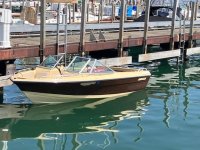
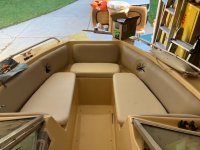
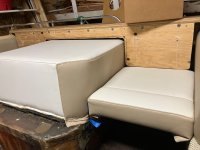
This is my boat, from the first time I took it out after doing a lot of work to repair the engine & drive, replace shift cable and replace a lot of the interior. I bought new captain's chairs to replace the back to back seats and have made the new backrest shown in the photo with the newly upholstered engine cover. I posted a few videos on YouTube in November, inside of the Milwaukee harbor.

I wouldn't have tackled the interior, but I saved a lot by doing the repairs and since a friend owns an upholstery shop, I have done a lot for his boats, he's donating all of the materials & sewing, my dad was an upholsterer and I worked for him and another shop, I'm able to install the covers, myself. If I had to pay for the interior, I would have left it alone because it would have far exceeded the boat's value.
 

Attachments

  • In water at SSYC blocked reg.jpg
    In water at SSYC blocked reg.jpg
    121.4 KB · Views: 17
  • Bow Cushions.jpg
    Bow Cushions.jpg
    52.8 KB · Views: 15
  • IMG_8207.jpg
    IMG_8207.jpg
    673.2 KB · Views: 14
  • IMG_4992.jpg
    IMG_4992.jpg
    98.1 KB · Views: 14
  • IMG_4993.jpg
    IMG_4993.jpg
    62.3 KB · Views: 11
  • IMG_4994.jpg
    IMG_4994.jpg
    60.6 KB · Views: 20
Louc, salt water is a pain. You've had remarkable luck with that Cobra. Truthfully they were actually good drives but the early shifting/gearset issues had some growing pains. And of course No One will work on them or any earlier OMC. (Or for that matter any early I/O including MerCruiser & Volvo).

The pre-Alpha #1 drives disappeared from corrosion even in fresh water. Early MerCathodes helped but we're not popular. Better continuity/bonding wires and increased use of MerCathode systems made a big difference.

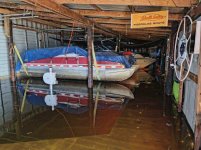
I'm fortunate to have a big shed at home & rent a boat house slip with a hoist. Here is all that was visible of my hoist (the winch) last week with the flooding on Poygan (WI). The pontoon is hanging in its winter slings in the next slip over.

As for fuel, I can get both 87 & 91 octane non-ethanol locally. Fortunately, all my old stuff is happy with 87.
 

Attachments

  • image0000.jpg
    image0000.jpg
    81 KB · Views: 14
Louc, salt water is a pain. You've had remarkable luck with that Cobra. Truthfully they were actually good drives but the early shifting/gearset issues had some growing pains. And of course No One will work on them or any earlier OMC. (Or for that matter any early I/O including MerCruiser & Volvo).

The pre-Alpha #1 drives disappeared from corrosion even in fresh water. Early MerCathodes helped but we're not popular. Better continuity/bonding wires and increased use of MerCathode systems made a big difference.

I'm fortunate to have a big shed at home & rent a boat house slip with a hoist. Here is all that was visible of my hoist (the winch) last week with the flooding on Poygan (WI). The pontoon is hanging in its winter slings in the next slip over.

As for fuel, I can get both 87 & 91 octane non-ethanol locally. Fortunately, all my old stuff is happy with 87.
By early, do you mean pre-'82? Mine is a 120 and it was just as easy to work on and find parts as a later Alpha, I didn't like working on the old stuff, though. WRT OMC, I really liked being able to change the impeller and raw water pump cover without needing to drop the lower GC.
 
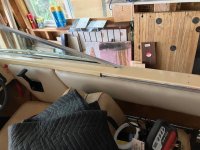
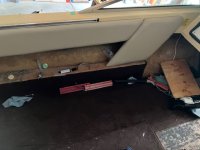
Like that older Four Winns! I have to pull out the coaming panel on the starboard side because the wood in the rear portion of it is falling apart. I fixed the port side about 8 years ago and it's held up well. At the same time I think I'm going to install a Sea Star CH 1700 control to replace the sloppy old OMC OEM unit. I also have to have the big sunpad re-done, the 25 year old vinyl is starting to come apart.

About the Cobra drive, there is one local guy who will work on them. I have a spare drive and might get the lower & upper rebuilt, so I have a spare. The other options, SEI makes a conversion kit to put one of their Alpha copies on a Cobra transom mount. I hear it works pretty well. I guess you could use the conversion kit and just use a rebuilt Alpha 1 Gen 2. Another more expensive option is to convert to a Volvo SX, using most of the Cobra transom mount with the Volvo pivot housing. This is possible because the Volvo SX used a modified Cobra transom mount when OMC and Volvo were in the joint venture period. But used/rebuilt Volvo drives are expensive, and these are getting old now too.

What I liked about this boat is it is small enough to trailer (20'9") but is a true deep V with a 21* deadrise, so it rides great in the chop we get here. My local areas are 2 harbors that lead out into LI Sound, and we are about 8 miles across from Norwalk Ct.

Hope the one I have to do now is as easy as this one was....
coaming panel repair.jpg

Boat at the dock 9-2023 small.jpg
 
Last edited:
In 82/83 time frame they "squared" up the drive cosmetically & called it an "R" drive. It got bigger better hydraulic cylinders & all sorts of bonding wires to improve bonding continuity. Internally, guts were the same as the prior several years (the rounded fins & top cap with lifting hole years).
About 1 year later they introduced the "MR" drive with the improved lower 1/2. These units DO NOT have a preload pin on the top of the vertical shaft. Early MR's has a letter "A" stamped on the end of the prop shaft for easy identification (in other words without needing to separate the top from bottom to see the vertical shaft). Upper guts remained the same. The "MR" was an Alpha without a formal introduction.

It's my belief they postponed the Alpha introduction until just after OMC introduced the Cobra so Mercury could "1 up" OMC.

All the above is regarding MC1, R, MR & Alpha gen1. Not discussing Model 0 (60/80/90 hp), #2, #3, TR/TRS, Bravo or Alpha gen2

Fortunately or unfortunately depending on your point of view, I have a plethora of MC1, R, MR & Alpha gen1 parts back to the mid 60s. Also one boat each with a 140 & 165. Most lower unit parts from 1970 & newer are still not too hard to find.

The 120 was nearly indestructible, the 140 (4 cyl) almost as good so long as you didn't overheat it & warp the head. All the inline 6's regardless if the real early 140 hp 194CID, 150 hp 230CID, 160/165 HP 250CID were all nearly indestructible.
 
I would think it's almost a mirror image other than the remote.

I've never replaced a controller with aftermarket but have worked on some. IIRC, there will be more than 1 hole to connect the shift cable which essentially alters the amount of shift travel. Mercruiser & OMC had different travel requirements & I don't remember the details.
 
Back
Top