

Logo

Volvo Penta Year/Model Identification And Flushing

mayjamest

New member
Hello everyone,

Currently running my brothers boat and trying to get an ID on the engine. I have searched the block high and low for a badge, but can't find any ID on the year/model. I know it is a Volvo Penta, thinking an early 2000's 5.0 or 5.7 maybe? Anyone have any pointers to find a stamp/serial/badge on this thing? I don't have the shroud that has that info, unfortunately.

Second question, what is the proper flushing protocol after use? I keep this in a slip, so it is in the water all the time. Do I need to run the engine while flushing, just flush with the engine off?
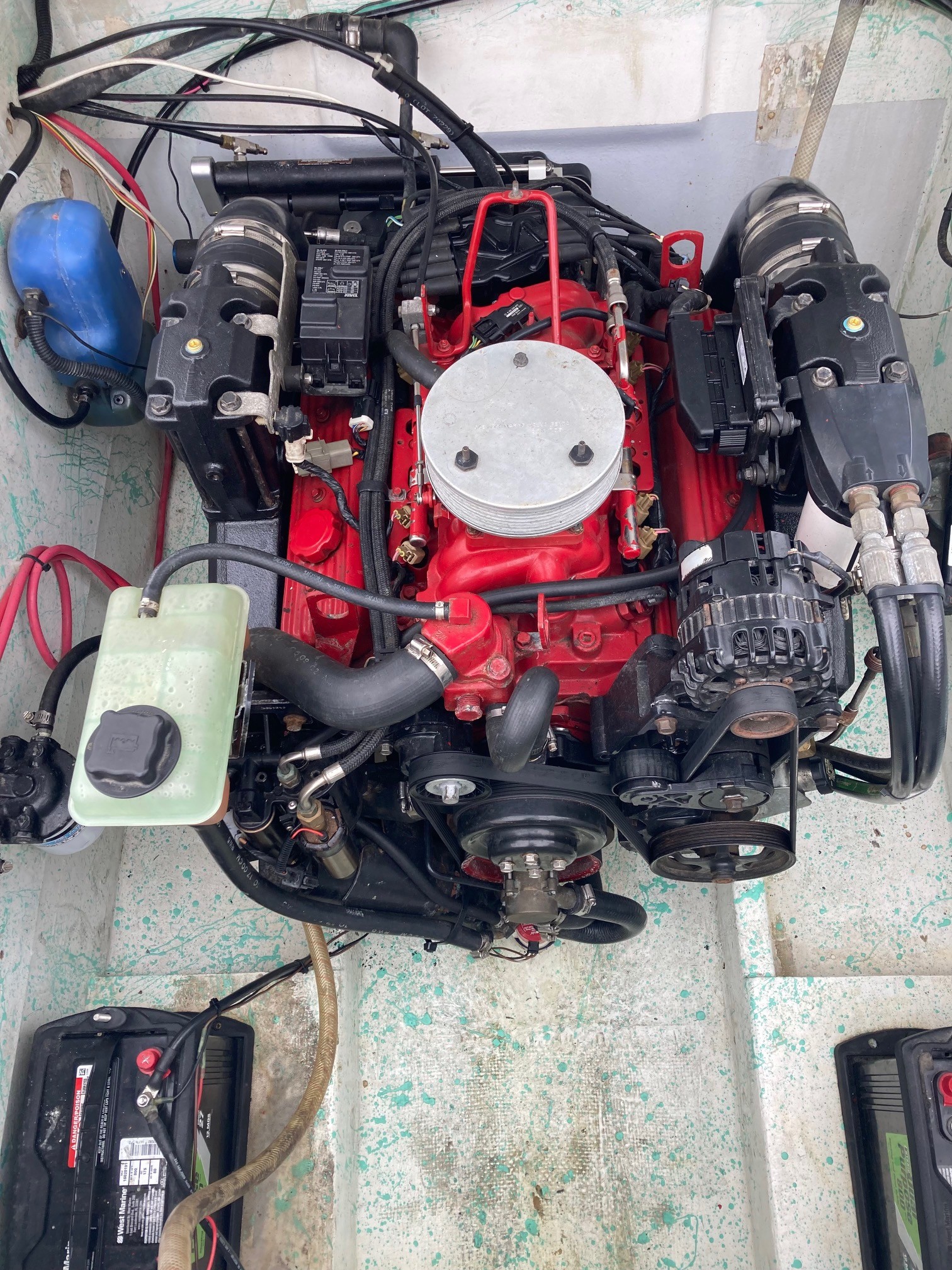
Volvo Penta.jpg


Thanks for all the help!
 
I would say the easiest path is to get the part number off the ECU and work backwards from there...agreed its likely to be an early to mid 2000's engine given the HVS distributor and the MPI hardware. If you have access to the sides of the block, many times you can stick a phone down and grab a few pics...GM casting marks are pretty easy to see most of the time. given the fuel pump's location, probably not easy to access the build data (stamped into ledge).

As to flushing, I see the raw water pump but not its inlet so how to introduce the fresh water is TBD...with NO heat exchanger, I'd would flush it with the engine running...

this may help, too...

VP ID info
 
Last edited:
I would say the easiest path is to get the part number off the ECU and work backwards from there...agreed its likely to be an early to mid 2000's engine given the HVS distributor and the MPI hardware. If you have access to the sides of the block, many times you can stick a phone down and grab a few pics...GM casting marks are pretty easy to see most of the time. given the fuel pump's location, probably not easy to access the build data (stamped into ledge).

As to flushing, I see the raw water pump but not its inlet so how to introduce the fresh water is TBD...with NO heat exchanger, I'd would flush it with the engine running...

This engine does have a heat exchanger, and there is a flush port like the image below (little blue connector).
1753815136090.png
 
i see the degas bottle but don't see the HX in either pic (two different engines)...so if it has one, I believe.

on the FWC'ed engines, I believe it is best to run the engine while flushing as well...the exhaust elbows are designed for a running engine...
 
i see the degas bottle but don't see the HX in either pic (two different engines)...so if it has one, I believe.

on the FWC'ed engines, I believe it is best to run the engine while flushing as well...the exhaust elbows are designed for a running engine...
I know on this engine the block is cooled via heat exchanger and coolant, the raw water I believe only cools the exhaust system.

Not sure what Degas bottle/HX mean?
 
HX = Heat eXchanger

the raw water has to cool the heat exchanger to remove the heat from the coolant...otherwise the engine has to overheat...I'd imagine a keel cooler is possible but have never seen a volvo gasoline engine connected to one.
 
HX = Heat eXchanger

the raw water has to cool the heat exchanger to remove the heat from the coolant...otherwise the engine has to overheat...I'd imagine a keel cooler is possible but have never seen a volvo gasoline engine connected to one.

See marked photo below. HX in the lower circle and the flush port in blue is circled as well.
Screenshot 2025-07-29 141913.png
 
Blue cap has an engine running symbol on it, so engine running while flushing.
Here are some do's and don'ts.

Engine Flush
Volvo Penta engines incorporate an engine flushing
port designed to flush the engine with fresh water
while the engine is running. If flushing the engine with
the boat in the water, the engine should not be run
higher than idle or sea water may be drawn in with the
fresh water.
NOTICE! When flushing the engine with the boat in
the water, fresh water pressure must be
17 psi (117 kPa) or greater.
1. If the engine is running, shut it down.
2. Remove the blue plastic cap from the hose that is
clamped to the starboard side of the engine. It is
marked with the running engine flush symbol (1).
3. Connect a water hose from a fresh water source
to the flush connector on the engine (2).
4. Turn water on full and start the engine.
5. Let engine idle until engine temperature stabilizes
at its normal operating range. This will allow the
thermostat to open and ensure the fresh water
circulates throughout the engine.
6. After engine is flushed, shut engine the down.
7. Disconnect water hose and reinstall the cap.

When re-installing the blue cap on the fresh
water flush hose, tighten it by hand, then
tighten 1/4 turn using a wrench. If the cap is
too loose, air may be sucked in, causing the
engine to overheat, resulting in damage.


If you can find a serial number on the transom plate or drive you can sometimes enter them here and it will show the engine serial number that was part of the original package.


You can skip #5 because of freshwater cooling --- run 5-10 minutes.
 
Blue cap has an engine running symbol on it, so engine running while flushing.
Here are some do's and don'ts.

Engine Flush
Volvo Penta engines incorporate an engine flushing
port designed to flush the engine with fresh water
while the engine is running. If flushing the engine with
the boat in the water, the engine should not be run
higher than idle or sea water may be drawn in with the
fresh water.
NOTICE! When flushing the engine with the boat in
the water, fresh water pressure must be
17 psi (117 kPa) or greater.
1. If the engine is running, shut it down.
2. Remove the blue plastic cap from the hose that is
clamped to the starboard side of the engine. It is
marked with the running engine flush symbol (1).
3. Connect a water hose from a fresh water source
to the flush connector on the engine (2).
4. Turn water on full and start the engine.
5. Let engine idle until engine temperature stabilizes
at its normal operating range. This will allow the
thermostat to open and ensure the fresh water
circulates throughout the engine.
6. After engine is flushed, shut engine the down.
7. Disconnect water hose and reinstall the cap.

When re-installing the blue cap on the fresh
water flush hose, tighten it by hand, then
tighten 1/4 turn using a wrench. If the cap is
too loose, air may be sucked in, causing the
engine to overheat, resulting in damage.


If you can find a serial number on the transom plate or drive you can sometimes enter them here and it will show the engine serial number that was part of the original package.


You can skip #5 because of freshwater cooling --- run 5-10 minutes.

I took a picture of the badge from the outdrive before it went back in the water. Using your lookup, seems like it is a 2006-present part. Not sure if this came with the Volvo Penta that was put into the boat a few years ago, or if the outdrive was a separate purchase.

Good notes on flushing the system. Should I be using salt away or anything when flushing, or just doing straight fresh water?
IMG_7041.jpg
 
Yes that serial number has never been registered. Might be a replacement? Maybe try the transom plate number.
Water is better then nothing, I'm in Minnesota so no experience with salt away other then adding the Volvo kit for customers headed to FL.

I get more then a few overheating calls, so I wanted to make clear that Volvo made that plug with a hex head so people would know it must be tightened with a wrench. This is why wing nuts have been banned for battery connections. The wing nuts were always meant to be tightened with a tool, but that seems to go right over most boaters head.
 
Yes that serial number has never been registered. Might be a replacement? Maybe try the transom plate number.
Water is better then nothing, I'm in Minnesota so no experience with salt away other then adding the Volvo kit for customers headed to FL.

I get more then a few overheating calls, so I wanted to make clear that Volvo made that plug with a hex head so people would know it must be tightened with a wrench. This is why wing nuts have been banned for battery connections. The wing nuts were always meant to be tightened with a tool, but that seems to go right over most boaters head.

So I located where the riveted badge on the back of the block is supposed to be. Looks like somebody removed the badge from the block, seems sketchy to me. Any clue why someone would remove the badge from the block, other than theft? The story is this engine was in a harbor patrol boat previously, is there a reason a harbor patrol boat would de-badge the engine?

Kinda feel like I have exhausted all my options of getting an ID on this thing at this point.
 
The block might have been remanufactured at one time?
A scan tool can sometimes get the serial number out of the ECM that it was first installed on.
 
Back
Top