fishnmaine
Contributing Member
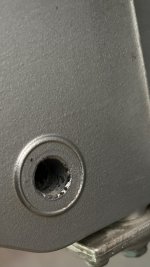
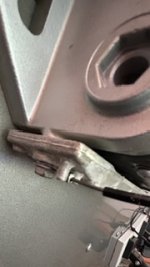
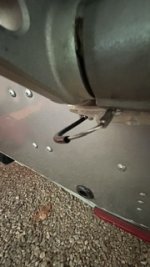
This is the sound that's irritating. When i loosen the bottom bolt on the lower bushing swivel it almost completely stops. its sound to me its dry. Is this normal to happen. 115 hp Honda. Trying to post video later.
MarineEngine.com does not offer troubleshooting assistance or repair advice by email or by telephone.
You are invited to join our public Boat Repair Forum to seek assistance from other members.
You may also visit the Boat Motor Manuals section of our site to obtain a service manual.
Apparently, this website will not let me download. A video always says file is too large, even though I shrink it down to 10 seconds.This is the sound that's irritating. When i loosen the bottom bolt on the lower bushing swivel it almost completely stops. its sound to me its dry. Is this normal to happen. 115 hp Honda. Trying to post video later.
Hello JGMOHi,
There are many years models of the 115 Honda. You didn't say how old yours is. Do you know how old the outboard is?
Look at the link below. Is the popping coming from the area of item number 10?...bushing, swivel case.
If so, is item number 9, wire, lead (the electrical ground bonding wire) there and still intact? That wire is very important for keeping electrolysis from happening and eating up the metals of your outboard.
if the popping sound is in the area of bushing #10, there's nothing for it but to remove them and look at what damage there may be. Those bushings do wear out and need to be replaced when they do. It's a pain but you can usually do it with the outboard on the boat and only removing one side of the the stern
bracket (see item 14 in the link below)
While on the above parts page, notice items 1 and 23. The sacrificial zinc anode and one of the bolts for holding it on near a drawing of the electrical bonding wire with a caption of F 11 nearby
The F 11 page reference takes you back to the link I attached for the power trim unit and the other screw for holding the bonding wire to the zinc. If you fail to keep the zinc anode or the bonding wire fresh and connected, it will eventually cause.you all sorts of grief from metal being "eaten away" on your outboard.
Good luck.
I managed one photo the other three doesn't downloadHello JGMO
Thank you so much for that info..#1 my outboard is a 2016 BF115D had it since new. I maybe have 50 hrs on it my electric troll motor has probably 1000 hours on it so I go to show you. I don't use the outboard all that much, only from Point A to point B. i maintain it faithfully. As far as the Anode they is a slight discoloration but it's not pitted at all.. wire it still looks brand new.. but I am going to get a new Anode kit even though they don't look bad at all, I know they should be replaced sometime for time.
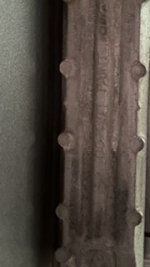
#2 I took the upper cylinder pin right out. It was in perfect condition. Still had some grease in it, but I greased it. Lower rod bolt i removed left side was fine but right side there was very slight corrosion it wasn't any powdery form most look like it was dried up white lithium grease but maybe it was corrosion cleaned it up loaded it with grease.. i did notice very slight play going up and down not sure if that's normal or not. After all that the noise stopped goes up and down smoothly no noise whatsoever but that #10 bushing I love to replace. Sure I can remove that bracket but wouldn't i need a hoist to keep the motor from even dropping down, this is something I'm not equipped with.
Hi,
There are many years models of the 115 Honda. You didn't say how old yours is. Do you know how old the outboard is?
Look at the link below. Is the popping coming from the area of item number 10?...bushing, swivel case.
If so, is item number 9, wire, lead (the electrical ground bonding wire) there and still intact? That wire is very important for keeping electrolysis from happening and eating up the metals of your outboard.
if the popping sound is in the area of bushing #10, there's nothing for it but to remove them and look at what damage there may be. Those bushings do wear out and need to be replaced when they do. It's a pain but you can usually do it with the outboard on the boat and only removing one side of the the stern
bracket (see item 14 in the link below)
While on the above parts page, notice items 1 and 23. The sacrificial zinc anode and one of the bolts for holding it on near a drawing of the electrical bonding wire with a caption of F 11 nearby
The F 11 page reference takes you back to the link I attached for the power trim unit and the other screw for holding the bonding wire to the zinc. If you fail to keep the zinc anode or the bonding wire fresh and connected, it will eventually cause.you all sorts of grief from metal being "eaten away" on your outboard.
Good luck.
Thank you so much for your knowledge feedback.Well, in my opinion, you don't need to worry about the zinc, wire OR those bushings. 50 hours is almost nothing for these as long as it's on a trailer and not submerged in salt water on the back of a boat.
It also sounds to me as if you've taken care of your concern with a little clean up and some lube.
ALL DONE! (dust your hands off)
It's true that the grease can get very dry and hard and cause problems. It's been known to harden like rock and damage steel. Especially pins and the tubes they slide in. I've seen it happen.
Grease is mostly some sort of soap solution with a little oil mixed in and all Grease is NOT created equally.
There's high quality and very poor quality. Too many people (and manufacturers) buy low quality grease because it's cheap. That may be what happened here. If you want advice about what to use, find your local bulk oil supplier and pay them a visit. They can point you to the quality stuff but they'll probably try to sell you a 5 gallon bucket of it.
Be cautious about the stuff in auto parts stores. Some is good but much is cheap crap at those places and their staffs usually don't know the difference.
Keeping ANY grease from hardening from age or the oil being washed away requires periodic removal and replacement. If grease zerk fittings are present, it usually means that the joint can be PURGED of old grease as the new stuff goes in.
BUT NOT ALWAYS!!
Purging a sealed grease joint is a mistake and ruins the seals intended to keep the inside clean and water from getting in. You don't want to do that so make an effort to know how that joint is supposed to be serviced before pulling the grease gun trigger.
Always clean any excess grease away after purging because grease attracts dirt and debris and can eventually lead to problems.
If you ever DO want to change those bushings, you will NOT need a hoist.
You can simply unpin the trim unit and tilt the outboard up as far as it will go then use a line or tow strap to hold it in place. Gravity does most of the work because most of the weight of the outboard is in the powerhead.
With the powerhead essentially inside the hull and the extension case almost horizontal when the outboard is tilted to the extreme like that, the outboard gets balanced over the boats transom. A strap tied across the hull over the top of the powerhead will hold it there and the one remaining bracket can easily support the outboard with the other bracket removed.
If it concerns you that it won't, you can use something to prop up the extension case but having done this job myself (not on a 115), I can assure you that it won't be necessary.
What IS important is choosing the correct bracket to remove. That's because access might be difficult if you remove the wrong side. I chose the latest model listed for the 115hp as an example in the link I sent and it looks to me as if removing the port (or left) side bracket might be best but I could be wrong. You will need to look that over carefully before starting.
If you did select the wrong side, the only real problem would be having to put it back on and then remove the other side. A lot of EXTRA work.
Ok, more info than probably ever needed or wanted but...
...since I was already here....
Good luck