

Logo

Mounting 4.3 Cobra - Motor Mounts and Stringer questions

theydrewa31

Regular Contributor
Hello Gentlemen!

I am currently restoring a Starcraft Islander 221V with a 1988 4.3 Liter Cobra engine. The hull material is 5052 riveted Aluminum.

I'm starting service on the engine soon but trying to get some questions answered ahead of time so I can order parts and supplies so they arrive when I'm getting ready to re-install the motor, as I have a short timeline of availability to get this stuff done.

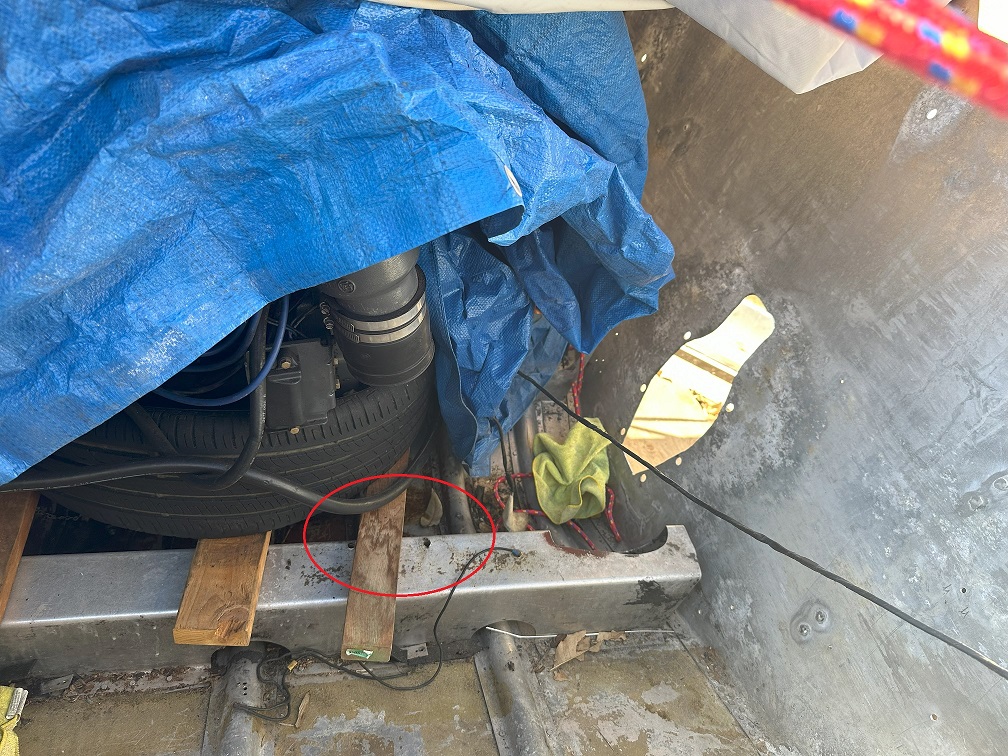
I'll start with some photos to get you up to speed with how she was previously set up. Below is a picture of where the engine is mounted in the boat. The engine is sitting there under the tarp. I moved the engine so that I could remove the old transom wood which had rotted away to almost nothing. I'll be replacing the transom wood with 2 pieces of 1" marine ply laminated together with epoxy. On this model of boat there is only a layer of aluminum on the outside of the transom. The motor mounts are mounted onto the aluminum stringers shown in the red circle in the photo below.

Only the front motor mounts were supported. The rear motor mounts were previously not used. I know that the motor was changed out at some point, and I assume that the outdrive was as well. Being completely honest I don't have much faith that the previous owner really knew what he was doing judging by most of the work I have seen on the boat, so I am curious if it is normal to only have the front motor mounts attached?

Mounting Point.jpg


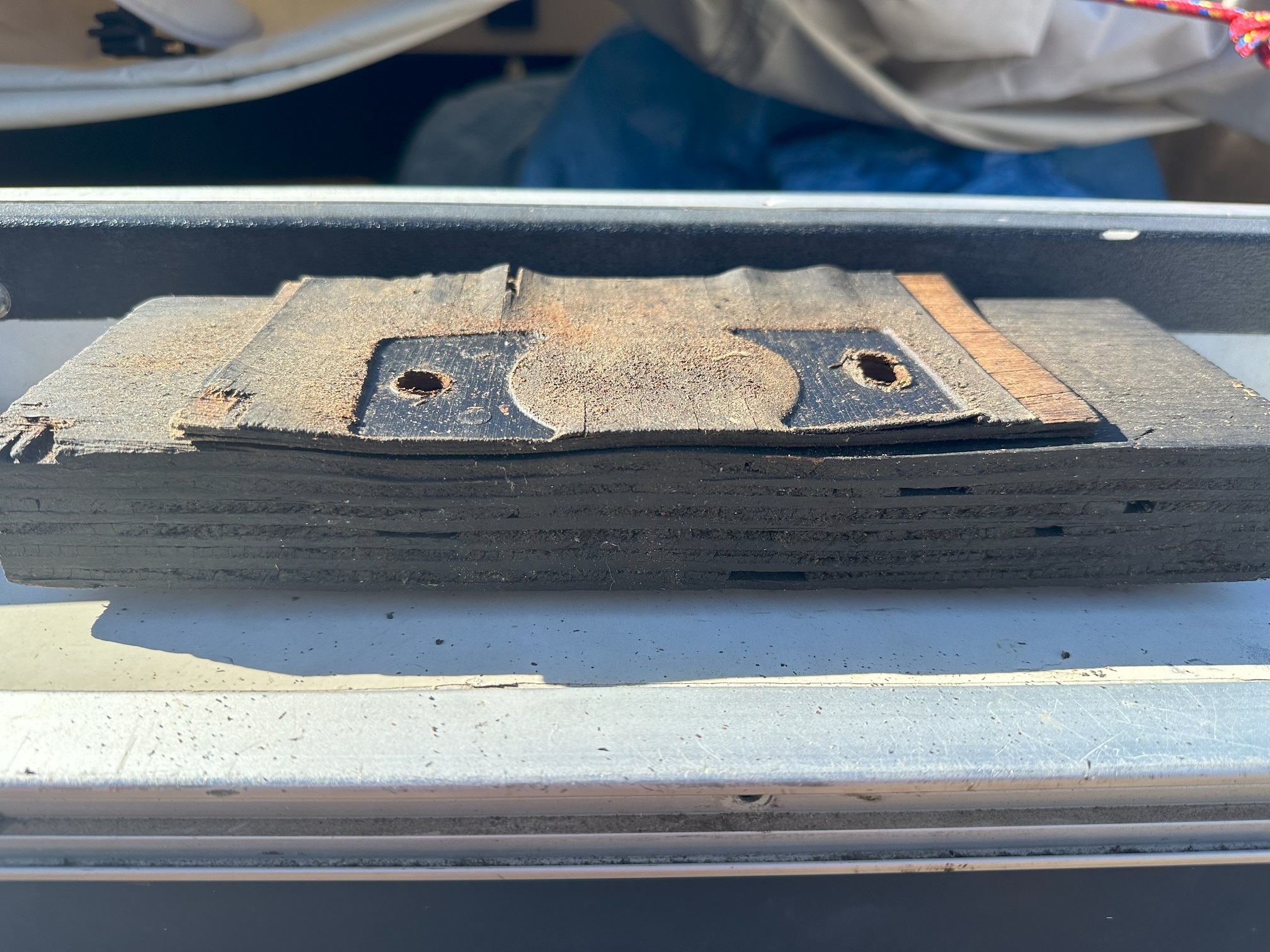
The front mounts had a block of plywood underneath, along with a piece of lauan. Is it common to use blocks for the motor mounts on aluminum boats? My first thought was that it was done as a spacer, but now I am curious if it was done to isolate the metals to limit galvanic interaction? A magnet does not stick to the feet of the motor mounts so I had assumed that they were aluminum. If it is necessary to have something there to isolate the motor mount I will probably use some kind of hardwood like oak, but I am open to recommendations for that.
Spacer Plate.jpg
 
The stringers in these Starcraft Islanders have thick pieces of plywood inside of them. I think that the plywood inside my stringers was replaced when the motor was changed, as most other photos I have seen of the plywood inside of these was much thicker. I will probably be replacing these plywood pieces inside of the stringers but I am not looking forward to it as I will likely need to remove the gas tank in order to do so. Any recommendations with regards to what kind of wood or how thick it should be would be greatly appreciated. I plan to use marine ply for this and coat it with epoxy, but again I am open to suggestions. A photo of one of the stringers showing the internal plywood is shown below.

stringer meat.jpg


The front motor mounts are shown below. The rubber seems to be in OK condition. I don't see any cracking in the rubber. Is there a way to check these to make sure they are still good to be used? There does not appear to be any cracking in the rubber.

Lastly, the motor mounts were previously attached with lag bolts running through the feet of the motor mounts, the upper spacing block, the aluminum stringer and terminating into the plywood inside of the stringer. They are magnetic so I am guessing they are steel. When I mount the engine what type of fasteners should be used? I could use lag bolts as had been done previously or I can try to run large bolts through the stringer and attach them on the bottom side with a nut if that is a better option. Also I am wondering what is the best type of fastener material to limit galvanic interaction?
 
Update: I measured the amount of threading available for vertical adjustment on the motor mounts, and compared that with the thickness of the motor mount feet. It appears I would have a maximum of about an inch of vertical adjustment left that I could use. The blocks that came out looks like they would have been in the neighborhood of 1 3/4" before the plywood compressed. So I am going to assume that the blocks were installed there as spacers, and not as a means to isolate metals for purposes of limiting galvanic interaction.
 
I can’t help with this as I have only had this ‘glass boat here in the salt but I suggest you head over to the restoration forum at iboats there are a couple of guys who are restoring the same boat IIFC. Check it out I’ve been there 22 years!
 
I can’t help with this as I have only had this ‘glass boat here in the salt but I suggest you head over to the restoration forum at iboats there are a couple of guys who are restoring the same boat IIFC. Check it out I’ve been there 22 years!
 
2023 end of season.jpg

our boat, 1988 Four Winns 200 Horizon, deck and stringers were done back in '07, hull paint job done in '12, engine top end overhaul in '17. owned since 2002...
trailer a 94 Load Rite with a lot of upgrades, longer tongue, longer roller bars, 6000 lb axle, 12" surge brakes, and 225/75-15 Load Range E tires...but it really only makes two trips to the ramp from my house a year, lol a whole 3/4 mile! boat is on a mooring all season
 
Lots of questions. Lemme see if I can help.
Transom. The drives are designed with the understanding that they will be used in a hull made of FRP so they're made for a thick transom. Your boat had that wood material for padding. The hull itself doesn't require the wood for strength. That said, do the best job you can laminating the wood and getting it in place. Be sure when cutting the hole for the drive that you include relief for the steering arm. Soak the insides of the hole with thinned epoxy. 50-50 mix of epoxy to acetone and just keep laying it on until it won't soak up any more. As long as you have the wood encapsulated in epoxy resin it won't rot again.
Rear mounts. The inner transom piece of the drive assembly has the rear engine mounts built in. There are non on the engine itself. The bellhousing/drive coupler guard has the rear mounts on there. You drop the engine onto the inner transom assembly. Should be bolts that go through the vertical holes.
Stringers. Again, the aluminum is what gives the structure and the wood is just to run the lag bolts into. Your marine play laminations will be fine. I am not a fan of lag bolts as they are too easy to over tighten and strip out.
Motor mounts. Vibration is the enemy of aluminum. What these pads are doing is damping the vibration transmitted by the engine into the stringer and causing fatigue. You want a material that does this without being too compressible that the engine goes out of alignment. Wood is pretty good at that and is cheap. Use it or try something like an UHMW plastic such as Nylon. You can get blocks of Nylon in 1/2, 3/4 etc thickness at McMaster-Carr.
The engine should be placed so that the side to side alignment is dead center front to rear. The rear mounts will center it up pretty well, you need to triple check the front before drilling the holes for the front engine mounts. This means that you might need to place and remove the engine a couple times to get it right. This way, when you go to align the drive to the engine you are only adjusting the up/down of the front motor mounts.
Hope all this makes sense.
Somewhere out there will be diagrams with detailed measurements of the engine, the motor mounts, etc for your engine and drive. Try to find the installation manual for this package, which will have all those details.
 
View attachment 34261
our boat, 1988 Four Winns 200 Horizon, deck and stringers were done back in '07, hull paint job done in '12, engine top end overhaul in '17. owned since 2002...
trailer a 94 Load Rite with a lot of upgrades, longer tongue, longer roller bars, 6000 lb axle, 12" surge brakes, and 225/75-15 Load Range E tires...but it really only makes two trips to the ramp from my house a year, lol a whole 3/4 mile! boat is on a mooring all season
That's a nice looking boat! Did you do the paint yourself? I have a lot of work to do on my trailer as well that I am not looking forward to. Man boats are a lot of work aren't they?!
 
It’s Imron so that is not a DIY project. Had a local boat & fiberglass shop spray it like 12 years ago and it still looks good!
 
Be sure when cutting the hole for the drive that you include relief for the steering arm. Soak the insides of the hole with thinned epoxy. 50-50 mix of epoxy to acetone and just keep laying it on until it won't soak up any more. As long as you have the wood encapsulated in epoxy resin it won't rot again.
Good point about the steering arm. I'll make sure to leave space for that. And thanks for the tip about the Acetone. And yes, I had planned to get as much epoxy on there as I possibly can. Already have the epoxy sitting in the garage ready to go!

Rear mounts. The inner transom piece of the drive assembly has the rear engine mounts built in. There are non on the engine itself. The bellhousing/drive coupler guard has the rear mounts on there. You drop the engine onto the inner transom assembly. Should be bolts that go through the vertical holes.
That makes sense. Thanks for clearing that up for me.

Again, the aluminum is what gives the structure and the wood is just to run the lag bolts into. Your marine play laminations will be fine. I am not a fan of lag bolts as they are too easy to over tighten and strip out.
That was my thought exactly. I'd prefer to use bolts and nuts myself if I can reach far enough to access the nuts inside the stringers. Should I be using grade 8 zinc plated bolts for that? Or would hot dipped galvanized, or 316 steel be better for that? I assume that 316 steel would not be the best since it will be in contact with multiple aluminum surfaces.
Motor mounts. Vibration is the enemy of aluminum. What these pads are doing is damping the vibration transmitted by the engine into the stringer and causing fatigue. You want a material that does this without being too compressible that the engine goes out of alignment. Wood is pretty good at that and is cheap. Use it or try something like an UHMW plastic such as Nylon. You can get blocks of Nylon in 1/2, 3/4 etc thickness at McMaster-Carr.
Thanks for that! I was not aware of this option. Gotta' love McMaster-Carr! I'll probably lean towards the UHMW, it seems like the better long term solution. A little more pricey than wood, but I like to do things once the right way wherever I can afford it.
The engine should be placed so that the side to side alignment is dead center front to rear.
This is the only part I didn't understand. When you say centered "front to rear" did you mean "port to starboard" within the stringers/ boat?

The rear mounts will center it up pretty well, you need to triple check the front before drilling the holes for the front engine mounts. This means that you might need to place and remove the engine a couple times to get it right. This way, when you go to align the drive to the engine you are only adjusting the up/down of the front motor mounts.

Somewhere out there will be diagrams with detailed measurements of the engine, the motor mounts, etc for your engine and drive. Try to find the installation manual for this package, which will have all those details.
Thanks for all of that advice. It sounds like a lot of patience will be needed. I'll definitely pick up that installation manual. It sounds like I will need it.

Thank you so much for taking the time to explain all of that to me o2batsea! This is extremely helpful!
 
Back
Top